Rivington Street is named after James Rivington who some say led a double life while living in New York City during the Revoutionary Era. Rivington was born in London England in 1724 to a family of successful publishers. After his bookstore failed causing him to lose his fortune, Rivington dedcided to start anew in the colonies and in 1760 arrived in Philadelphia. A year later, Rivington would open a new bookstore in New York City where he would be forever be linked to. (PHOTO CREDIT: THE NEW YORK HISTORICAL SOCIETY)
Rivington was a staunch supporter of the British crown and did so in his newspaper which was known as Rivington's Gazetter. At first the newspaper was balanced in its reporting of the news but as events in the colonies took a more rebellious nature the paper took a tone similar to its printer. King's Handbook of New York City 1892 describes one instance where Rivington took the rebellious colonists to task with the revolts following the passage of the Stamp Act of 1765:
In the year 1765 the Stamp Act was passed, and the disruption of America and England began. The New-Yorkers forgot their old-time local controversies, and took sides in the new contest. Rivington's Gazetteer stigmatized the patriots as rebels, traitors, banditti, fermenters of sedition, sons of licentiousness and the like
As you can imagine, press of this kind towards those colonists who were growing more and more anti-British did not go over very well. The rebellious colonists were led by a group known as the Sons of Liberty who grew to become a thorn in the side of the Lieutenant-Governor Cadawallader Colden. Many of their actions took the form of protests, public speeches, erection of liberty poles and to the extreme skirmishes with local redcoats, taking of supply depots and cannons. The Sons of Liberty turned their attention to James Rivington and his Tory newspaper.
As Kara Pierce describes in here scholarly paper A Revolutionary Masquerade: The Chronicles of James Rivington, Rivington's anti-colonist writings caused "satires, effigies and mockeries of Rivington began to appear in writings from popular poets to addresses to the Continental Congress". Rivington seemed to brush off the attacks, often printing them in his paper. Pierce also shows that a war of words had been brewing between Rivington and Captain Isaac Sears, who was considered to be one of New York's leading patriots. Often Rivington printed the letters received by him from Sears and his retort in his paper. These actions infuriated Sears to the point to physical retaliation.
In May of 1775, a group of colonists mobbed the Rivington home and press causing Rivington to flee with fellow Tory Myles Cooper to the British man-of-war Kingfisher. The attacks would come to a head on November 23, 1775 when a group of men on horseback led by Captain Sears attacked on Rivington's printing press. In doing so, the rebels destroyed the press and taking its parts to make bullets. Rivington and his family left New York City for London a disillusioned man only to return to when New York City was under British occupation.
History shows that Rivington continued to print his newspaper through 1783 and after he shut down his operation, Rivington lived with his son something of a poor existence until his death in 1802. Or so we thought. History has a way of making things interesting.
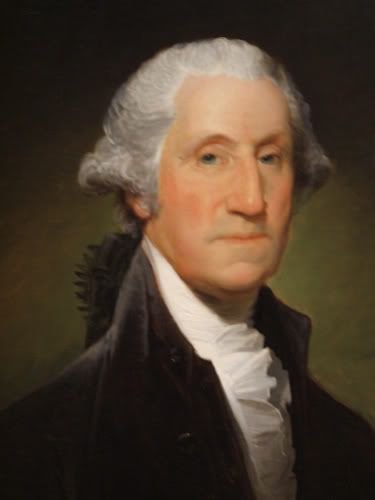
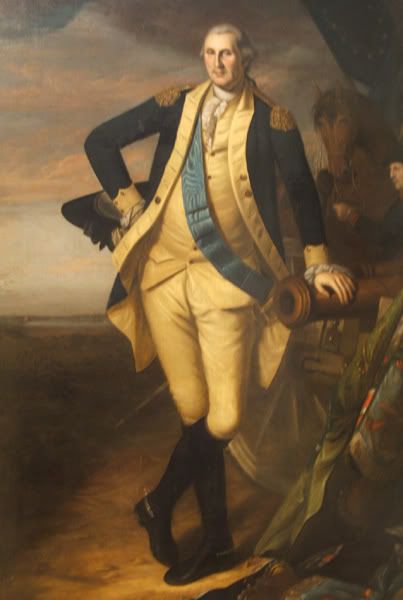
Recent scholarship has brought to light a different angle to James Rivington. It is believed that James Rivington, the staunch Tory publisher was in fact a spy in the employ of the revolutionary spy ring known as the Culper Ring. Based on the research of Robert Townsend's papers by Morton Pennypacker (1872-1956), James Rivington was one of the spies utilized by the Culper Ring and their leader George Washington during the British occupation of New York City. Historian Catherine Snell Crary (1909-1974) published “The Tory and the Spy” in William and Mary Quarterly in 1959 wrote that based on the journals of George Washington's grandson George Washington Parke Custis, James Rivington worked as a spy for the colonies. Historian Philip Ranlet in his book The New York Loyalists states that Rivington worked as a spy for the colonists. As recent as 2006, Kara Pierce has also devoted research to the idea that James Rivington was a spy in the online Journal of History for Binghamton University in the Spring 2006 issue entitled “A Revolutionary Masquerade: The Chronicles of James Rivington”.
Regardless what his reasons for turning against the British, Rivington's actions were essential in the victory of the colonists during the Revolutionary War. Hopefully further scholarship and research can reveal more into the life of James Rivington and maybe he can get some of the credit that he deserves.
FH
For Further Reading:
- Catherine Mary Crary "A Tory and a Spy", William and Mary Quarterly, Third Series, Vol 16 No. 1 (Jan 1959) pp 61-72
- Morton Pennypacker, General Washington's Spies, on Long Island and in New York (New York, Aegean Park Press, 1999)
- Morton Pennypacker, The two spies,: Nathan Hale and Robert Townsend (New York, Houghton Mifflin Co, 1930)
- Kara Pierce “A Revolutionary Masquerade: The Chronicles of James Rivington”, Binghamton University Journal of History Spring 2006
- Philip Ranlet, The New York Loyalists, 2nd Edition (Lanham, University Press of America, 2002)
- New York's Tory Printer New York Times March 1, 1896