I'm taking a bit of a different tact with this post. To be perfectly honest, this post should go on my other blog page: The Observations and Rants of a Native New Yorker (I know, I should be ashamed by the cheap mention of my other blog on this one but I'll take what I can get). Since there is a bit of a historical New York City slant to this one, I decided on it being here. So let's ride with it.
Alright, this whole naming of neighborhoods with an acronym is going too far. I'll admit, TriBeCa (Triangle Below Canal Street) has a certain caché to it but isn't bad enough that Brooklyn has a neighborhood named after a big-eared elephant (Actually DUMBO an acronym for the Down Under the Manhattan Bridge Overpass not the Disney character). Now there's a new one called BoCoCa, which is an amalgam of the neighborhoods of Boerum Hill, Cobble Hill and Carroll Gardens. Umm, excuse me, but what was wrong with Boreum Hill, Cobble Hill and Carroll Gardens. Not only is gentrification stripping classical New York City neighborhoods of their look and character, now names are being wiped away into the annals of history. Similar to the movement of renaming Hell's Kitchen to Clinton, the same is happenening to the good old "Brook-a-line". Let me clue you good folks in on where the names of Boerum Hill, Cobble Hill and Carroll Gardens comes from.
Boerum Hill derives its name from the Dutch colonial landowners of the area: The Boreum family. The patriarch of the family Willem Jacobse Van Boerum immigrated to New Amsterdam in 1649. His great grandson Simon Boerum was a landowner of the area that is named after his family.
The Boerum Hill Neighborhood Assocation
An excellent page on things that have faded into NYC History
The exact history behind the name Cobble Hill is somewhat of a mystery to me. What I have read is that the original name of the area was "Cobleshill". On the hill, a fort was built by General Nathanial Greene for the defense of Long Island (Brooklyn) during the Revolutionary War. The neighborhood was designated an Historic District on December 30, 1969.
City of New York Community Board Six webpage
A New York Times article on Cobble Hill from 2001
The Gowanus Lounge on Blogspot
Carroll Gardens is named after Charles Carroll of Maryland. Carroll was a Revolutionary War veteran and the only Roman Catholic to sign the Declaration of Independence The neighborhood was designated an Historic District on September 25, 1973.
The City of New York Community Board Six Webpage
The Brooklyn Public Library's page on Carroll Gardens
The Carroll Gardens Neighborhood Association Webpage
Sure, some of you will read the information on the links that I posted and you'll see that the names of these neighborhoods were changed from the generic South Brooklyn because of the need by some of its residents to shed the negative stigma of the past and to pave the way for gentrification. Which is what I am describing with the umbrella term of BoCoCa. At least the names of Boerum Hill, Cobble Hill and Carroll Gardens have their roots in New York and American Histories. To me, BoCoCa sounds way too fake and so "Un" New York. So come on, let's leave the names on these neighborhoods alone. Call them as they should be called.
BUT, if you insist on changing the way these neighborhoods are referred to, check out these sites:
The Gothamist: BoCoCa: Not a New Cocoa
A PDF file from Bigapplegreeter.org on BoCoCa
So let me know what you think. Change them or not.
Monday, January 18, 2010

Thursday, January 14, 2010
Who Was Asser Levy
I remember, as a child,driving around with my dad throughout New York City. To be honest, I really can't remember what we were doing or where we were coming from. But I do specifically remember a certain route he always took to get to the FDR Drive. My dad would drive east along 23rd Street then take a left on to the FDR Drive service road which he would take to the highway. There was always a street along the way that always caught my eye. The name of that street was Asser Levy Place. I always wondered who Asser Levy was. Well, here he is.
Asser Levy's fate was intertwined with that of the Quakers who I had mentioned in a previous post on the Flushing Remonstrance of 12/27/1657. How are they related you may ask. Well, in the same way that the Dutch Director-General of New Amsterdam Peter Stuyvesant opposed the Quakers in the New Amsterdam colony, Stuyvesant opposed the Jews. But before I get to the religious conflict in New Amsterdam, allow me to shed some light on another conflict concerning another Dutch colony: Nieuw Holland (Dutch Brazil).
The colony of Nieuw Holland was located along parts of Northeastern and East of current day Brazil. Settled by the Dutch West India Company the colony was one that promoted religious tolerance since the aim of the colony (as those of the other Dutch West India Colonies) was to make money. This religious tolerance attracted a large number of Jews, especially Sephardic Jews (those from Spain) to the area. To highlight how the Jewish population settled in the area, it is believed that The Kahal Zur Israel Synagogue is the oldest Synagogue in the of the Americas, located in the town of Recife. This Reuters article from Haaretz.com offers more information on the Kahal Zur Israel Synagogue. Click here.
Relative peace lasted in the area until it was taken over by the Portuguese in January of 1654. A final treaty was signed on August 6, 1661 giving Portugal total control of the former Dutch colonies in Brazil. Click here for more information on the Treaty of the Hague 1661. The thought of the Catholic Portuguese taking over brought back images of religious persecution and violence against the Jews. This caused a small number of Jewish citizens to flee from Nieuw Holland. The Jews boarded a ship called the Sainte Catherine which was headed to the Dutch colony of Nieuw Amsterdam.
You would think that going from one Dutch colony to another would be an easy transition. Unfortunately for the Jewish refugees, the colony that they would arrive to on September 1654 was controlled by Peter Stuyvesant, a fiercely religious member of the Dutch Reformed Church. A group of the size that made up the Jewish refugees (23 in total) needed permission from the local authorities to take up residence. Stuyvesant refused, echoing many of the Anti-Semitic rhetoric that would be heard centuries later to describe the Jews: Usury, Deceitful, Infectious, Blasphemers of the name of Christ to name a few. Since Stuyvesant needed approval from his superiors in Amsterdam, he sent his objections to the Jewish refugees in writing. Not willing to remain passive, the Jews also sent their own letter to Amsterdam. They directed their request to remain in Nieuw Amsterdam to the Jewish community of Amsterdam.
The Jewish community enjoyed religious and economic freedom in Amsterdam and used their influence in Amsterdam to file a petition to the Dutch West India Company. It should be noted, that many a shareholder in the Dutch West India Company was Jewish who made his or her profits engaging in trade under the Dutch banner throughout the world.
As how it would be repeated with the Quakers, the Dutch West India Company went against its Director-General Stuyvesant and decreed that the Jewish refugees could travel in and out of Nieuw Amsterdam, engage in trade and live in the colony. These rights came with restrictions:
- The Jews could not train with the guard or militia. A special tax would replace military service by the Jews
- Barred from trading outside the colony
- Barred from building permanent houses and symbols of their faith
- The Jews must care for their own poor. The poor Jews would not be wards of the colony
Stuyvesant used all the force at his disposal to enforce the rules the company placed on the Jewish refugees. So, how does Asser Levy fit into this whole scenario.
By 1655, Levy became the most prominent member of the Jewish refugees in Nieuw Amsterdam and continued the fight for freedom in the colony. Through his efforts, the restrictions placed against the refugees by the Dutch West India Company were lifted:
- The Jews could now join the militia and not have to pay the special tax
- They were allowed to trade within the Hudson and Delaware Valleys
- They were allowed to build houses and places of worship, which they did so along Whitehall Street
Asser Levy's efforts earned the Jews the right to citizenship in 1657 allowing them full rights as burghers within the colony. These 23 Jewish refugees from Nieuw Holland would become the first permanent Jewish settlement in North America. As for Asser Levy he would go on to become New York's first kosher butcher ands a founding member of Shearith Israel, the country’s first Jewish congregation. The street to the west of the recreation center bearing his name was named after Levy by local law in 1954. What's ironic is that the playground and recreation center which bears Asser Levy's name is only a short block from the housing complex that bears the name of Peter Stuyvesant (Stuyvesant town). To see the area on Google Maps, Click Here. Even along the city streets of modern day New York, they are not that far from each other.
For Further Reading:
Hasia R. Diner The Jews of the United States, 1654-2000 (Berkeley, University of California Press, 2004);
Russell R. Shorto The Island at the Center of the World (New York, Vintage Books, 2005)
Asser Levy's fate was intertwined with that of the Quakers who I had mentioned in a previous post on the Flushing Remonstrance of 12/27/1657. How are they related you may ask. Well, in the same way that the Dutch Director-General of New Amsterdam Peter Stuyvesant opposed the Quakers in the New Amsterdam colony, Stuyvesant opposed the Jews. But before I get to the religious conflict in New Amsterdam, allow me to shed some light on another conflict concerning another Dutch colony: Nieuw Holland (Dutch Brazil).
The colony of Nieuw Holland was located along parts of Northeastern and East of current day Brazil. Settled by the Dutch West India Company the colony was one that promoted religious tolerance since the aim of the colony (as those of the other Dutch West India Colonies) was to make money. This religious tolerance attracted a large number of Jews, especially Sephardic Jews (those from Spain) to the area. To highlight how the Jewish population settled in the area, it is believed that The Kahal Zur Israel Synagogue is the oldest Synagogue in the of the Americas, located in the town of Recife. This Reuters article from Haaretz.com offers more information on the Kahal Zur Israel Synagogue. Click here.
Relative peace lasted in the area until it was taken over by the Portuguese in January of 1654. A final treaty was signed on August 6, 1661 giving Portugal total control of the former Dutch colonies in Brazil. Click here for more information on the Treaty of the Hague 1661. The thought of the Catholic Portuguese taking over brought back images of religious persecution and violence against the Jews. This caused a small number of Jewish citizens to flee from Nieuw Holland. The Jews boarded a ship called the Sainte Catherine which was headed to the Dutch colony of Nieuw Amsterdam.
You would think that going from one Dutch colony to another would be an easy transition. Unfortunately for the Jewish refugees, the colony that they would arrive to on September 1654 was controlled by Peter Stuyvesant, a fiercely religious member of the Dutch Reformed Church. A group of the size that made up the Jewish refugees (23 in total) needed permission from the local authorities to take up residence. Stuyvesant refused, echoing many of the Anti-Semitic rhetoric that would be heard centuries later to describe the Jews: Usury, Deceitful, Infectious, Blasphemers of the name of Christ to name a few. Since Stuyvesant needed approval from his superiors in Amsterdam, he sent his objections to the Jewish refugees in writing. Not willing to remain passive, the Jews also sent their own letter to Amsterdam. They directed their request to remain in Nieuw Amsterdam to the Jewish community of Amsterdam.
The Jewish community enjoyed religious and economic freedom in Amsterdam and used their influence in Amsterdam to file a petition to the Dutch West India Company. It should be noted, that many a shareholder in the Dutch West India Company was Jewish who made his or her profits engaging in trade under the Dutch banner throughout the world.
As how it would be repeated with the Quakers, the Dutch West India Company went against its Director-General Stuyvesant and decreed that the Jewish refugees could travel in and out of Nieuw Amsterdam, engage in trade and live in the colony. These rights came with restrictions:
- The Jews could not train with the guard or militia. A special tax would replace military service by the Jews
- Barred from trading outside the colony
- Barred from building permanent houses and symbols of their faith
- The Jews must care for their own poor. The poor Jews would not be wards of the colony
Stuyvesant used all the force at his disposal to enforce the rules the company placed on the Jewish refugees. So, how does Asser Levy fit into this whole scenario.
By 1655, Levy became the most prominent member of the Jewish refugees in Nieuw Amsterdam and continued the fight for freedom in the colony. Through his efforts, the restrictions placed against the refugees by the Dutch West India Company were lifted:
- The Jews could now join the militia and not have to pay the special tax
- They were allowed to trade within the Hudson and Delaware Valleys
- They were allowed to build houses and places of worship, which they did so along Whitehall Street
Asser Levy's efforts earned the Jews the right to citizenship in 1657 allowing them full rights as burghers within the colony. These 23 Jewish refugees from Nieuw Holland would become the first permanent Jewish settlement in North America. As for Asser Levy he would go on to become New York's first kosher butcher ands a founding member of Shearith Israel, the country’s first Jewish congregation. The street to the west of the recreation center bearing his name was named after Levy by local law in 1954. What's ironic is that the playground and recreation center which bears Asser Levy's name is only a short block from the housing complex that bears the name of Peter Stuyvesant (Stuyvesant town). To see the area on Google Maps, Click Here. Even along the city streets of modern day New York, they are not that far from each other.
For Further Reading:
Hasia R. Diner The Jews of the United States, 1654-2000 (Berkeley, University of California Press, 2004);
Russell R. Shorto The Island at the Center of the World (New York, Vintage Books, 2005)
Wednesday, April 15, 2009
Jackie Robinson Day April 15
April 15 is known to many people as the day that the TaxMan gets his due. But for baseball people, April 15th has a different significance. On April 15th, 1947, a young 28-year-old man took the field at Ebbets Field for the Brooklyn Dodgers in a game against the Boston Braves. While playing first base, he had no hits in three at bats. Though this description is somewhat ordinary, the player was anything but. For the first time since the late 1800’s, a black man was allowed to play professional baseball within the ranks of Major League Baseball. That man was Jack Roosevelt "Jackie" Robinson (January 13, 1919-October 24, 1972).
"It kills me to lose. If I'm a troublemaker, and I don't think that my temper makes me one, then it's because I can't stand losing. That's the way I am about winning, all I ever wanted to do was finish first." Jackie Robinson
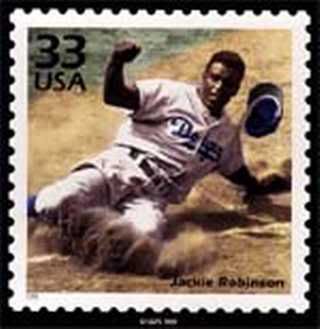 Robinson brought an energy and excitement to both the field of play that was only seen on the fields that the Negro Leagues baseball was played on. His determination on the field translated to a form of baseball that emphasized speed and aggressive baserunning that many of the fans of Major League baseball had not seen. Where Robinson was aggreesive on the field he was patient with the abuse that was hurled towards him from not only fans but from fellow players who often insulted him and threatened to not take the field if Robinson played in the game.
"A life is not important except in the impact it has on other lives."Jackie Robinson
The significance of Robinson’s playing for the Dodgers was not only felt within the baseball ranks. In terms of society, Robinson would become one of the icons of the growing civil rights movement. As Buck O'Neill says in the documentary Pride and Preserverance: The Story of the Negro Leagues:
"Jackie Robinson, that was the beginning of the civil rights movement. That was before Brown vs. The Board of Education. That was before Sister Rosa Parks said 'I'm not going to move to the back of the bus today'. Martin Luther King was a sophomore at Spellman at the time. That's what got the ball moving."
Robinson’s playing of professional baseball, gave many young black men and women a positive role model. If Jackie could do it, why couldn’t they do it.
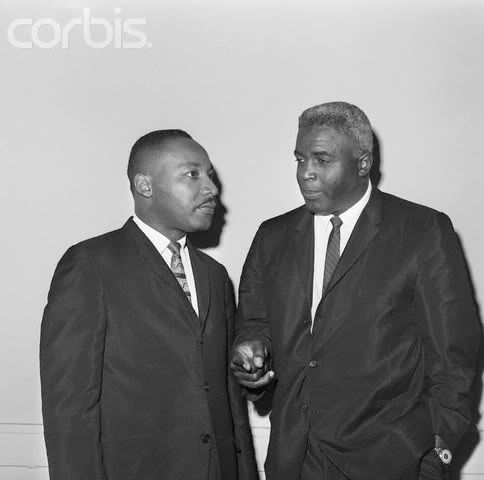 "The right of every American to first-class citizenship is the most important issue of our time." Jackie Robinson
His later life was devoted to the enhancement and advancement of the civil rights movement not only for African American but for all Americans.
"With all major league players, coaches and umpires wearing Jackie's No. 42, we hope to demonstrate the magnitude of his impact on the game of baseball, Major League Baseball will never forget the contributions that Jackie made both on and off the field" Commissioner of Major League Baseball Allen H. “Bud” Selig
"The way I figured it, I was even with baseball and baseball with me. The game had done much for me, and I had done much for it." Jackie Robinson
Today, every Major League player will wear number 42 as their uniform number in honor of the breaking of the color barrier by Robinson 62 years ago.
"When Jack stepped foot on the field on April 15, 1947, and broke the color barrier in baseball, he became a catalyst for social change in America," Rachel Robinson
That he did Mrs. Robinson, and thank you for all that your husband and family have done. The world would not be the same without it.
Here are some links to check out about Jackie Robinson:
- The Official Jackie Robinson Page
- Time Magazine 100 Most Important People of the 20th Century Listing for Jackie Robinson
- U.S. Library of Congress Baseball and Jackie Robinson Page
- Afro-Am Listing for Jackie Robinson
- The National Baseball Hall of Fame and Museum listing for Jackie Robinson
- The Jackie Robinson Foundation
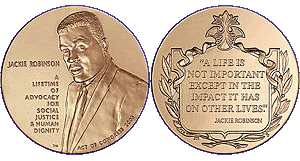
"It kills me to lose. If I'm a troublemaker, and I don't think that my temper makes me one, then it's because I can't stand losing. That's the way I am about winning, all I ever wanted to do was finish first." Jackie Robinson
Robinson brought an energy and excitement to both the field of play that was only seen on the fields that the Negro Leagues baseball was played on. His determination on the field translated to a form of baseball that emphasized speed and aggressive baserunning that many of the fans of Major League baseball had not seen. Where Robinson was aggreesive on the field he was patient with the abuse that was hurled towards him from not only fans but from fellow players who often insulted him and threatened to not take the field if Robinson played in the game. "A life is not important except in the impact it has on other lives."Jackie Robinson
The significance of Robinson’s playing for the Dodgers was not only felt within the baseball ranks. In terms of society, Robinson would become one of the icons of the growing civil rights movement. As Buck O'Neill says in the documentary Pride and Preserverance: The Story of the Negro Leagues:
"Jackie Robinson, that was the beginning of the civil rights movement. That was before Brown vs. The Board of Education. That was before Sister Rosa Parks said 'I'm not going to move to the back of the bus today'. Martin Luther King was a sophomore at Spellman at the time. That's what got the ball moving."
Robinson’s playing of professional baseball, gave many young black men and women a positive role model. If Jackie could do it, why couldn’t they do it.
"The right of every American to first-class citizenship is the most important issue of our time." Jackie RobinsonHis later life was devoted to the enhancement and advancement of the civil rights movement not only for African American but for all Americans.
"With all major league players, coaches and umpires wearing Jackie's No. 42, we hope to demonstrate the magnitude of his impact on the game of baseball, Major League Baseball will never forget the contributions that Jackie made both on and off the field" Commissioner of Major League Baseball Allen H. “Bud” Selig
"The way I figured it, I was even with baseball and baseball with me. The game had done much for me, and I had done much for it." Jackie Robinson
Today, every Major League player will wear number 42 as their uniform number in honor of the breaking of the color barrier by Robinson 62 years ago.
"When Jack stepped foot on the field on April 15, 1947, and broke the color barrier in baseball, he became a catalyst for social change in America," Rachel Robinson
That he did Mrs. Robinson, and thank you for all that your husband and family have done. The world would not be the same without it.
Here are some links to check out about Jackie Robinson:
- The Official Jackie Robinson Page
- Time Magazine 100 Most Important People of the 20th Century Listing for Jackie Robinson
- U.S. Library of Congress Baseball and Jackie Robinson Page
- Afro-Am Listing for Jackie Robinson
- The National Baseball Hall of Fame and Museum listing for Jackie Robinson
- The Jackie Robinson Foundation
Sunday, January 27, 2008
Why is there the “The” in The Bronx?
I’ve often wondered why certain street names and places are named as they are. So, in keeping with the theme of the last post (Houston Street), I am examining not only how but why The Bronx is called The Bronx. Now, unlike the other four boroughs of the Greater City of New York (Manhattan, Brooklyn, Queens and Staten Island), The Bronx has two distinctions. One is that The Bronx is the only borough that is not either on an island or is it’s own island (Manhattan and Staten Island on their own islands and Queens/Brooklyn being on the western part of Long Island). The Bronx is located on the mainland. Second is that The Bronx is the only borough that is referred to in the definite particle of “The”.
Is it ego? Albeit, The Bronx can be a hard place to live in and to those who live there, living there and surviving is a badge of honor. But though many may claim it to be that a place like The Bronx deserves to be referred to with a “The”, there is a simpler reason why. Before I go into it, some simple dates and facts would be necessary for background reasons.
With the “discovery” of the island of Manhattan by Henry Hudson in 1609, the Dutch set up a series of trading settlements along the Hudson River. For the sake of this article, we’ll focus in on the Southern settlement of New Amsterdam. By the 1620’s, colonists started to make the journey from Europe to the “New World” to make a new life for themselves and their families. One of these individuals came to New Amsterdam from Holland was Jonas Bronck. Arriving on the ship De Brent Von Trogon (The Fire of Troy) in 1639, Bronck acquired a large tract of land between the Great Kills (Hudson River) and The Aqualung (The East River).
As the years progressed, villages and settlements developed throughout the area of what become known as Bronx with the Bronx River being the central point of the area. But why was in not known as Bronck? Since most of the population of the time had a particular lack of literacy, they read and wrote their words in the manner in which they spoke them. Hence the word Bronck became Bronx. Though originally part of Westchester, the western towns of Morrisania, West Farms and Kingsbridge were annexed to New York City in 1874 becoming the 23rd and 24th Wards of New York City. The Eastern part was annexed to New York City in 1895, three years before the Greater City of New York was created. The Bronx remained part of New York County until the year 1914 when it gained borough status. The citizens in honor of the river that runs through the new county chose the name of the new borough to reflect it.
Now here comes the reason for the “The”. Rivers are always referred to in the definite article. For example: The Nile, The Amazon, The Mississippi and The Bronx. So, since the borough was named after The Bronx River the County is also called The Bronx. There you have it, when someone asks you why The Bronx is named THE Bronx you can tell them.
FH
Is it ego? Albeit, The Bronx can be a hard place to live in and to those who live there, living there and surviving is a badge of honor. But though many may claim it to be that a place like The Bronx deserves to be referred to with a “The”, there is a simpler reason why. Before I go into it, some simple dates and facts would be necessary for background reasons.
With the “discovery” of the island of Manhattan by Henry Hudson in 1609, the Dutch set up a series of trading settlements along the Hudson River. For the sake of this article, we’ll focus in on the Southern settlement of New Amsterdam. By the 1620’s, colonists started to make the journey from Europe to the “New World” to make a new life for themselves and their families. One of these individuals came to New Amsterdam from Holland was Jonas Bronck. Arriving on the ship De Brent Von Trogon (The Fire of Troy) in 1639, Bronck acquired a large tract of land between the Great Kills (Hudson River) and The Aqualung (The East River).
As the years progressed, villages and settlements developed throughout the area of what become known as Bronx with the Bronx River being the central point of the area. But why was in not known as Bronck? Since most of the population of the time had a particular lack of literacy, they read and wrote their words in the manner in which they spoke them. Hence the word Bronck became Bronx. Though originally part of Westchester, the western towns of Morrisania, West Farms and Kingsbridge were annexed to New York City in 1874 becoming the 23rd and 24th Wards of New York City. The Eastern part was annexed to New York City in 1895, three years before the Greater City of New York was created. The Bronx remained part of New York County until the year 1914 when it gained borough status. The citizens in honor of the river that runs through the new county chose the name of the new borough to reflect it.
Now here comes the reason for the “The”. Rivers are always referred to in the definite article. For example: The Nile, The Amazon, The Mississippi and The Bronx. So, since the borough was named after The Bronx River the County is also called The Bronx. There you have it, when someone asks you why The Bronx is named THE Bronx you can tell them.
FH
Saturday, December 29, 2007
Flushing Remonstrance 12/27/1657
Our basic rights seem to be in the center of today’s political discussions. Such rights as Freedom of Speech and Freedom of Privacy seem to be constantly under attack in the current climate in this country. But imagine a time where there were no rights for religious worship. There was only one church and one man mandated that it was that particular church that was to be worshipped or else. This happened a little more than 350 years ago. But instead of allowing it to happen, a group of individuals decided to stop taking the abuse and stand up for themselves. The outcome of their actions led to the basic foundations that we now find within The Bill of Rights. These individuals were part of the Society of Friends, or as we know them today: The Quakers.
The Society of Friends was established in England by George Fox in the year 1652. The Quakers (as they were negatively called but grew to accept the moniker) followed a simple life that involved honesty, compassion and equality for all. It was through their actions that they chose to enlighten the newly “discovered” world to their beliefs. It was in the City of Boston that the Quakers met their toughest resistance.
In the Pilgrim stronghold of Boston, the Quakers were regularly ridiculed and persecuted for their beliefs. It is ironic to note, that the Pilgrims, who were also persecuted for their religious beliefs in Europe, found the freedom to practice their religion as they saw fit in Holland, but were unable to extend the same courtesy to the Quakers in Massachusetts. It was in 1657, that the Quakers saw an opportunity to practice their faith in peace. Henry Townsend who lived in Vlissingen (Current Day Flushing, New York) offered safe passage for those Quakers who wanted to leave any place that they had been persecuted. The plan worked well until it caught the eye of the Dutch Director-General of New Amsterdam, Peter Stuyvesant, who himself was a religious man but of the Dutch Reformed Church.
Peter Stuyvesant was brought in by The Dutch West Indies company to provide stable leadership to their fledgling business colony. Before Stuyvesant’s arrival, the colony was plagued by infighting between colonists, massive drinking and unruliness among the natives and the colonists. With Stuyvesant’s arrival in 1647 he attempted to being about order by closing brothels, enforcing religious observation on Sundays and of curbing the sale of arms and tobacco to the natives. It was with the enforcement of the religious observation that brought the Quakers into direct conflict with Stuyvesant.
Though the Dutch West Indies Company had no official rule about what religious practices were allowed, Stuyvesant took it upon himself to act on behalf of the Dutch Reformed Church. So when Townsend started to house his fellow Quakers, Stuyvesant fined him and had him shipped back to Holland. It was because of this that a group of Quakers got together and drafted a document that would be now known as The Flushing Remonstrance. Signed on December 27, 1657 it was within this document that they listed their displeasure with the persecution of their faith and how they believed it was their right to practice their faith, as they believed. They signed the document and had it delivered to Stuyvesant himself. This further caused Stuyvesant to go against the Quakers.
It wasn’t until the year 1662 that things came to a head. John Bowne went against the decrees and rules of Stuyvesant by continuing to house Quakers and allowing them to conduct their services under his roof. Stuyvesant had Bowne arrested in his own home and when he refused to renounce his faith, he was jailed and tortured for 3 months before being exiled to Holland.
Upon his arrival in Holland, Bowne pled his case to the directors of the Dutch West Indies Company. The directors acquitted Bowne of all charges and allowed him to return to New Amsterdam with specific rules for Stuyvesant to allow all people in the colony to practice their religious beliefs free from persecution. The rule stayed in place even when the British taking control of New Amsterdam a year later. Here is the official text of the Flushing Remonstrance:
December 27, 1657
Right Honorable,
You have been pleased to send up unto us a certain prohibition or command that we should not receive or entertain any of those people called Quakers because they are supposed to be by some, seducers of the people. For our part we cannot condemn them in this case, neither can we stretch out our hands against them, to punish, banish or persecute them for out of Christ God is a consuming fire, and it is a fearful thing to fall into the hands of the living God.
We desire therefore in this case not to judge least we be judged, neither to condemn least we be condemned, but rather let every man stand and fall to his own Master. Wee are bounde by the Law to Doe good unto all men, especially to those of the household of faith. And though for the present we seem to be unsensible of the law and the Law giver, yet when death and the Law assault us, if we have our advocate to seeke, who shall plead for us in this case of conscience betwixt God and our own souls; the powers of this world can neither attack us, neither excuse us, for if God justifye who can condemn and if God condemn there is none can justify.
And for those jealousies and suspicions which some have of them, that they are destructive unto Magistracy and Minssereye, that can not bee, for the magistrate hath the sword in his hand and the minister hath the sword in his hand, as witnesse those two great examples which all magistrates and ministers are to follow, Moses and Christ, whom God raised up maintained and defended against all the enemies both of flesh and spirit; and therefore that which is of God will stand, and that which is of man will come to nothing. And as the Lord hath taught Moses or the civil power to give an outward liberty in the state by the law written in his heart designed for the good of all, and can truly judge who is good, who is civil, who is true and who is false, and can pass definite sentence of life or death against that man which rises up against the fundamental law of the States General; soe he hath made his ministers a savor of life unto life, and a savor of death unto death.
The law of love, peace and liberty in the states extending to Jews, Turks, and Egyptians, as they are considered the sonnes of Adam, which is the glory of the outward state of Holland, soe love, peace and liberty, extending to all in Christ Jesus, condemns hatred, war and bondage. And because our Saviour saith it is impossible but that offenses will come, but woe unto him by whom they cometh, our desire is not to offend one of his little ones, in whatsoever form, name or title he appears in, whether Presbyterian, Independent, Baptist or Quaker, but shall be glad to see anything of God in any of them, desiring to doe unto all men as we desire all men should doe unto us, which is the true law both of Church and State; for our Savior saith this is the law and the prophets. Therefore, if any of these said persons come in love unto us, wee cannot in conscience lay violent hands upon them, but give them free egresse and regresse unto our Town, and houses, as God shall persuade our consciences. And in this we are true subjects both of Church and State, for we are bounde by the law of God and man to doe good unto all men and evil to noe man. And this is according to the patent and charter of our Towne, given unto us in the name of the States General, which we are not willing to infringe, and violate, but shall houlde to our patent and shall remaine, your humble subjects, the inhabitants of Vlishing.
Written this 27th day of December, in the year 1657 , by mee
Edward Heart, Clericus
Additional Signers
Tobias Feake
Nathaniell Tue
The marke of William Noble
Nicholas Blackford
William Thorne, Seignior
The marke of Micah Tue
The marke of William Thorne, Jr.
The marke of Philip Ud
Edward Tarne
Robert Field, senior
John Store
Robert Field, junior
Nathaniel Hefferd
Nich Colas Parsell
Benjamin Hubbard
Michael Milner
The marke of William Pidgion
Henry Townsend
The marke of George Clere
George Wright
Elias Doughtie
John Foard
Antonie Feild
Henry Semtell
Richard Stocton
Edward Hart
Edward Griffine
John Mastine
John Townesend
Edward Farrington
The Society of Friends was established in England by George Fox in the year 1652. The Quakers (as they were negatively called but grew to accept the moniker) followed a simple life that involved honesty, compassion and equality for all. It was through their actions that they chose to enlighten the newly “discovered” world to their beliefs. It was in the City of Boston that the Quakers met their toughest resistance.
In the Pilgrim stronghold of Boston, the Quakers were regularly ridiculed and persecuted for their beliefs. It is ironic to note, that the Pilgrims, who were also persecuted for their religious beliefs in Europe, found the freedom to practice their religion as they saw fit in Holland, but were unable to extend the same courtesy to the Quakers in Massachusetts. It was in 1657, that the Quakers saw an opportunity to practice their faith in peace. Henry Townsend who lived in Vlissingen (Current Day Flushing, New York) offered safe passage for those Quakers who wanted to leave any place that they had been persecuted. The plan worked well until it caught the eye of the Dutch Director-General of New Amsterdam, Peter Stuyvesant, who himself was a religious man but of the Dutch Reformed Church.
Peter Stuyvesant was brought in by The Dutch West Indies company to provide stable leadership to their fledgling business colony. Before Stuyvesant’s arrival, the colony was plagued by infighting between colonists, massive drinking and unruliness among the natives and the colonists. With Stuyvesant’s arrival in 1647 he attempted to being about order by closing brothels, enforcing religious observation on Sundays and of curbing the sale of arms and tobacco to the natives. It was with the enforcement of the religious observation that brought the Quakers into direct conflict with Stuyvesant.
Though the Dutch West Indies Company had no official rule about what religious practices were allowed, Stuyvesant took it upon himself to act on behalf of the Dutch Reformed Church. So when Townsend started to house his fellow Quakers, Stuyvesant fined him and had him shipped back to Holland. It was because of this that a group of Quakers got together and drafted a document that would be now known as The Flushing Remonstrance. Signed on December 27, 1657 it was within this document that they listed their displeasure with the persecution of their faith and how they believed it was their right to practice their faith, as they believed. They signed the document and had it delivered to Stuyvesant himself. This further caused Stuyvesant to go against the Quakers.
It wasn’t until the year 1662 that things came to a head. John Bowne went against the decrees and rules of Stuyvesant by continuing to house Quakers and allowing them to conduct their services under his roof. Stuyvesant had Bowne arrested in his own home and when he refused to renounce his faith, he was jailed and tortured for 3 months before being exiled to Holland.
Upon his arrival in Holland, Bowne pled his case to the directors of the Dutch West Indies Company. The directors acquitted Bowne of all charges and allowed him to return to New Amsterdam with specific rules for Stuyvesant to allow all people in the colony to practice their religious beliefs free from persecution. The rule stayed in place even when the British taking control of New Amsterdam a year later. Here is the official text of the Flushing Remonstrance:
December 27, 1657
Right Honorable,
You have been pleased to send up unto us a certain prohibition or command that we should not receive or entertain any of those people called Quakers because they are supposed to be by some, seducers of the people. For our part we cannot condemn them in this case, neither can we stretch out our hands against them, to punish, banish or persecute them for out of Christ God is a consuming fire, and it is a fearful thing to fall into the hands of the living God.
We desire therefore in this case not to judge least we be judged, neither to condemn least we be condemned, but rather let every man stand and fall to his own Master. Wee are bounde by the Law to Doe good unto all men, especially to those of the household of faith. And though for the present we seem to be unsensible of the law and the Law giver, yet when death and the Law assault us, if we have our advocate to seeke, who shall plead for us in this case of conscience betwixt God and our own souls; the powers of this world can neither attack us, neither excuse us, for if God justifye who can condemn and if God condemn there is none can justify.
And for those jealousies and suspicions which some have of them, that they are destructive unto Magistracy and Minssereye, that can not bee, for the magistrate hath the sword in his hand and the minister hath the sword in his hand, as witnesse those two great examples which all magistrates and ministers are to follow, Moses and Christ, whom God raised up maintained and defended against all the enemies both of flesh and spirit; and therefore that which is of God will stand, and that which is of man will come to nothing. And as the Lord hath taught Moses or the civil power to give an outward liberty in the state by the law written in his heart designed for the good of all, and can truly judge who is good, who is civil, who is true and who is false, and can pass definite sentence of life or death against that man which rises up against the fundamental law of the States General; soe he hath made his ministers a savor of life unto life, and a savor of death unto death.
The law of love, peace and liberty in the states extending to Jews, Turks, and Egyptians, as they are considered the sonnes of Adam, which is the glory of the outward state of Holland, soe love, peace and liberty, extending to all in Christ Jesus, condemns hatred, war and bondage. And because our Saviour saith it is impossible but that offenses will come, but woe unto him by whom they cometh, our desire is not to offend one of his little ones, in whatsoever form, name or title he appears in, whether Presbyterian, Independent, Baptist or Quaker, but shall be glad to see anything of God in any of them, desiring to doe unto all men as we desire all men should doe unto us, which is the true law both of Church and State; for our Savior saith this is the law and the prophets. Therefore, if any of these said persons come in love unto us, wee cannot in conscience lay violent hands upon them, but give them free egresse and regresse unto our Town, and houses, as God shall persuade our consciences. And in this we are true subjects both of Church and State, for we are bounde by the law of God and man to doe good unto all men and evil to noe man. And this is according to the patent and charter of our Towne, given unto us in the name of the States General, which we are not willing to infringe, and violate, but shall houlde to our patent and shall remaine, your humble subjects, the inhabitants of Vlishing.
Written this 27th day of December, in the year 1657 , by mee
Edward Heart, Clericus
Additional Signers
Tobias Feake
Nathaniell Tue
The marke of William Noble
Nicholas Blackford
William Thorne, Seignior
The marke of Micah Tue
The marke of William Thorne, Jr.
The marke of Philip Ud
Edward Tarne
Robert Field, senior
John Store
Robert Field, junior
Nathaniel Hefferd
Nich Colas Parsell
Benjamin Hubbard
Michael Milner
The marke of William Pidgion
Henry Townsend
The marke of George Clere
George Wright
Elias Doughtie
John Foard
Antonie Feild
Henry Semtell
Richard Stocton
Edward Hart
Edward Griffine
John Mastine
John Townesend
Edward Farrington
Subscribe to:
Posts (Atom)