I’ve often wondered why certain street names and places are named as they are. So, in keeping with the theme of the last post (Houston Street), I am examining not only how but why The Bronx is called The Bronx. Now, unlike the other four boroughs of the Greater City of New York (Manhattan, Brooklyn, Queens and Staten Island), The Bronx has two distinctions. One is that The Bronx is the only borough that is not either on an island or is it’s own island (Manhattan and Staten Island on their own islands and Queens/Brooklyn being on the western part of Long Island). The Bronx is located on the mainland. Second is that The Bronx is the only borough that is referred to in the definite particle of “The”.
Is it ego? Albeit, The Bronx can be a hard place to live in and to those who live there, living there and surviving is a badge of honor. But though many may claim it to be that a place like The Bronx deserves to be referred to with a “The”, there is a simpler reason why. Before I go into it, some simple dates and facts would be necessary for background reasons.
With the “discovery” of the island of Manhattan by Henry Hudson in 1609, the Dutch set up a series of trading settlements along the Hudson River. For the sake of this article, we’ll focus in on the Southern settlement of New Amsterdam. By the 1620’s, colonists started to make the journey from Europe to the “New World” to make a new life for themselves and their families. One of these individuals came to New Amsterdam from Holland was Jonas Bronck. Arriving on the ship De Brent Von Trogon (The Fire of Troy) in 1639, Bronck acquired a large tract of land between the Great Kills (Hudson River) and The Aqualung (The East River).
As the years progressed, villages and settlements developed throughout the area of what become known as Bronx with the Bronx River being the central point of the area. But why was in not known as Bronck? Since most of the population of the time had a particular lack of literacy, they read and wrote their words in the manner in which they spoke them. Hence the word Bronck became Bronx. Though originally part of Westchester, the western towns of Morrisania, West Farms and Kingsbridge were annexed to New York City in 1874 becoming the 23rd and 24th Wards of New York City. The Eastern part was annexed to New York City in 1895, three years before the Greater City of New York was created. The Bronx remained part of New York County until the year 1914 when it gained borough status. The citizens in honor of the river that runs through the new county chose the name of the new borough to reflect it.
Now here comes the reason for the “The”. Rivers are always referred to in the definite article. For example: The Nile, The Amazon, The Mississippi and The Bronx. So, since the borough was named after The Bronx River the County is also called The Bronx. There you have it, when someone asks you why The Bronx is named THE Bronx you can tell them.
FH
Sunday, January 27, 2008

Saturday, December 29, 2007
Flushing Remonstrance 12/27/1657
Our basic rights seem to be in the center of today’s political discussions. Such rights as Freedom of Speech and Freedom of Privacy seem to be constantly under attack in the current climate in this country. But imagine a time where there were no rights for religious worship. There was only one church and one man mandated that it was that particular church that was to be worshipped or else. This happened a little more than 350 years ago. But instead of allowing it to happen, a group of individuals decided to stop taking the abuse and stand up for themselves. The outcome of their actions led to the basic foundations that we now find within The Bill of Rights. These individuals were part of the Society of Friends, or as we know them today: The Quakers.
The Society of Friends was established in England by George Fox in the year 1652. The Quakers (as they were negatively called but grew to accept the moniker) followed a simple life that involved honesty, compassion and equality for all. It was through their actions that they chose to enlighten the newly “discovered” world to their beliefs. It was in the City of Boston that the Quakers met their toughest resistance.
In the Pilgrim stronghold of Boston, the Quakers were regularly ridiculed and persecuted for their beliefs. It is ironic to note, that the Pilgrims, who were also persecuted for their religious beliefs in Europe, found the freedom to practice their religion as they saw fit in Holland, but were unable to extend the same courtesy to the Quakers in Massachusetts. It was in 1657, that the Quakers saw an opportunity to practice their faith in peace. Henry Townsend who lived in Vlissingen (Current Day Flushing, New York) offered safe passage for those Quakers who wanted to leave any place that they had been persecuted. The plan worked well until it caught the eye of the Dutch Director-General of New Amsterdam, Peter Stuyvesant, who himself was a religious man but of the Dutch Reformed Church.
Peter Stuyvesant was brought in by The Dutch West Indies company to provide stable leadership to their fledgling business colony. Before Stuyvesant’s arrival, the colony was plagued by infighting between colonists, massive drinking and unruliness among the natives and the colonists. With Stuyvesant’s arrival in 1647 he attempted to being about order by closing brothels, enforcing religious observation on Sundays and of curbing the sale of arms and tobacco to the natives. It was with the enforcement of the religious observation that brought the Quakers into direct conflict with Stuyvesant.
Though the Dutch West Indies Company had no official rule about what religious practices were allowed, Stuyvesant took it upon himself to act on behalf of the Dutch Reformed Church. So when Townsend started to house his fellow Quakers, Stuyvesant fined him and had him shipped back to Holland. It was because of this that a group of Quakers got together and drafted a document that would be now known as The Flushing Remonstrance. Signed on December 27, 1657 it was within this document that they listed their displeasure with the persecution of their faith and how they believed it was their right to practice their faith, as they believed. They signed the document and had it delivered to Stuyvesant himself. This further caused Stuyvesant to go against the Quakers.
It wasn’t until the year 1662 that things came to a head. John Bowne went against the decrees and rules of Stuyvesant by continuing to house Quakers and allowing them to conduct their services under his roof. Stuyvesant had Bowne arrested in his own home and when he refused to renounce his faith, he was jailed and tortured for 3 months before being exiled to Holland.
Upon his arrival in Holland, Bowne pled his case to the directors of the Dutch West Indies Company. The directors acquitted Bowne of all charges and allowed him to return to New Amsterdam with specific rules for Stuyvesant to allow all people in the colony to practice their religious beliefs free from persecution. The rule stayed in place even when the British taking control of New Amsterdam a year later. Here is the official text of the Flushing Remonstrance:
December 27, 1657
Right Honorable,
You have been pleased to send up unto us a certain prohibition or command that we should not receive or entertain any of those people called Quakers because they are supposed to be by some, seducers of the people. For our part we cannot condemn them in this case, neither can we stretch out our hands against them, to punish, banish or persecute them for out of Christ God is a consuming fire, and it is a fearful thing to fall into the hands of the living God.
We desire therefore in this case not to judge least we be judged, neither to condemn least we be condemned, but rather let every man stand and fall to his own Master. Wee are bounde by the Law to Doe good unto all men, especially to those of the household of faith. And though for the present we seem to be unsensible of the law and the Law giver, yet when death and the Law assault us, if we have our advocate to seeke, who shall plead for us in this case of conscience betwixt God and our own souls; the powers of this world can neither attack us, neither excuse us, for if God justifye who can condemn and if God condemn there is none can justify.
And for those jealousies and suspicions which some have of them, that they are destructive unto Magistracy and Minssereye, that can not bee, for the magistrate hath the sword in his hand and the minister hath the sword in his hand, as witnesse those two great examples which all magistrates and ministers are to follow, Moses and Christ, whom God raised up maintained and defended against all the enemies both of flesh and spirit; and therefore that which is of God will stand, and that which is of man will come to nothing. And as the Lord hath taught Moses or the civil power to give an outward liberty in the state by the law written in his heart designed for the good of all, and can truly judge who is good, who is civil, who is true and who is false, and can pass definite sentence of life or death against that man which rises up against the fundamental law of the States General; soe he hath made his ministers a savor of life unto life, and a savor of death unto death.
The law of love, peace and liberty in the states extending to Jews, Turks, and Egyptians, as they are considered the sonnes of Adam, which is the glory of the outward state of Holland, soe love, peace and liberty, extending to all in Christ Jesus, condemns hatred, war and bondage. And because our Saviour saith it is impossible but that offenses will come, but woe unto him by whom they cometh, our desire is not to offend one of his little ones, in whatsoever form, name or title he appears in, whether Presbyterian, Independent, Baptist or Quaker, but shall be glad to see anything of God in any of them, desiring to doe unto all men as we desire all men should doe unto us, which is the true law both of Church and State; for our Savior saith this is the law and the prophets. Therefore, if any of these said persons come in love unto us, wee cannot in conscience lay violent hands upon them, but give them free egresse and regresse unto our Town, and houses, as God shall persuade our consciences. And in this we are true subjects both of Church and State, for we are bounde by the law of God and man to doe good unto all men and evil to noe man. And this is according to the patent and charter of our Towne, given unto us in the name of the States General, which we are not willing to infringe, and violate, but shall houlde to our patent and shall remaine, your humble subjects, the inhabitants of Vlishing.
Written this 27th day of December, in the year 1657 , by mee
Edward Heart, Clericus
Additional Signers
Tobias Feake
Nathaniell Tue
The marke of William Noble
Nicholas Blackford
William Thorne, Seignior
The marke of Micah Tue
The marke of William Thorne, Jr.
The marke of Philip Ud
Edward Tarne
Robert Field, senior
John Store
Robert Field, junior
Nathaniel Hefferd
Nich Colas Parsell
Benjamin Hubbard
Michael Milner
The marke of William Pidgion
Henry Townsend
The marke of George Clere
George Wright
Elias Doughtie
John Foard
Antonie Feild
Henry Semtell
Richard Stocton
Edward Hart
Edward Griffine
John Mastine
John Townesend
Edward Farrington
The Society of Friends was established in England by George Fox in the year 1652. The Quakers (as they were negatively called but grew to accept the moniker) followed a simple life that involved honesty, compassion and equality for all. It was through their actions that they chose to enlighten the newly “discovered” world to their beliefs. It was in the City of Boston that the Quakers met their toughest resistance.
In the Pilgrim stronghold of Boston, the Quakers were regularly ridiculed and persecuted for their beliefs. It is ironic to note, that the Pilgrims, who were also persecuted for their religious beliefs in Europe, found the freedom to practice their religion as they saw fit in Holland, but were unable to extend the same courtesy to the Quakers in Massachusetts. It was in 1657, that the Quakers saw an opportunity to practice their faith in peace. Henry Townsend who lived in Vlissingen (Current Day Flushing, New York) offered safe passage for those Quakers who wanted to leave any place that they had been persecuted. The plan worked well until it caught the eye of the Dutch Director-General of New Amsterdam, Peter Stuyvesant, who himself was a religious man but of the Dutch Reformed Church.
Peter Stuyvesant was brought in by The Dutch West Indies company to provide stable leadership to their fledgling business colony. Before Stuyvesant’s arrival, the colony was plagued by infighting between colonists, massive drinking and unruliness among the natives and the colonists. With Stuyvesant’s arrival in 1647 he attempted to being about order by closing brothels, enforcing religious observation on Sundays and of curbing the sale of arms and tobacco to the natives. It was with the enforcement of the religious observation that brought the Quakers into direct conflict with Stuyvesant.
Though the Dutch West Indies Company had no official rule about what religious practices were allowed, Stuyvesant took it upon himself to act on behalf of the Dutch Reformed Church. So when Townsend started to house his fellow Quakers, Stuyvesant fined him and had him shipped back to Holland. It was because of this that a group of Quakers got together and drafted a document that would be now known as The Flushing Remonstrance. Signed on December 27, 1657 it was within this document that they listed their displeasure with the persecution of their faith and how they believed it was their right to practice their faith, as they believed. They signed the document and had it delivered to Stuyvesant himself. This further caused Stuyvesant to go against the Quakers.
It wasn’t until the year 1662 that things came to a head. John Bowne went against the decrees and rules of Stuyvesant by continuing to house Quakers and allowing them to conduct their services under his roof. Stuyvesant had Bowne arrested in his own home and when he refused to renounce his faith, he was jailed and tortured for 3 months before being exiled to Holland.
Upon his arrival in Holland, Bowne pled his case to the directors of the Dutch West Indies Company. The directors acquitted Bowne of all charges and allowed him to return to New Amsterdam with specific rules for Stuyvesant to allow all people in the colony to practice their religious beliefs free from persecution. The rule stayed in place even when the British taking control of New Amsterdam a year later. Here is the official text of the Flushing Remonstrance:
December 27, 1657
Right Honorable,
You have been pleased to send up unto us a certain prohibition or command that we should not receive or entertain any of those people called Quakers because they are supposed to be by some, seducers of the people. For our part we cannot condemn them in this case, neither can we stretch out our hands against them, to punish, banish or persecute them for out of Christ God is a consuming fire, and it is a fearful thing to fall into the hands of the living God.
We desire therefore in this case not to judge least we be judged, neither to condemn least we be condemned, but rather let every man stand and fall to his own Master. Wee are bounde by the Law to Doe good unto all men, especially to those of the household of faith. And though for the present we seem to be unsensible of the law and the Law giver, yet when death and the Law assault us, if we have our advocate to seeke, who shall plead for us in this case of conscience betwixt God and our own souls; the powers of this world can neither attack us, neither excuse us, for if God justifye who can condemn and if God condemn there is none can justify.
And for those jealousies and suspicions which some have of them, that they are destructive unto Magistracy and Minssereye, that can not bee, for the magistrate hath the sword in his hand and the minister hath the sword in his hand, as witnesse those two great examples which all magistrates and ministers are to follow, Moses and Christ, whom God raised up maintained and defended against all the enemies both of flesh and spirit; and therefore that which is of God will stand, and that which is of man will come to nothing. And as the Lord hath taught Moses or the civil power to give an outward liberty in the state by the law written in his heart designed for the good of all, and can truly judge who is good, who is civil, who is true and who is false, and can pass definite sentence of life or death against that man which rises up against the fundamental law of the States General; soe he hath made his ministers a savor of life unto life, and a savor of death unto death.
The law of love, peace and liberty in the states extending to Jews, Turks, and Egyptians, as they are considered the sonnes of Adam, which is the glory of the outward state of Holland, soe love, peace and liberty, extending to all in Christ Jesus, condemns hatred, war and bondage. And because our Saviour saith it is impossible but that offenses will come, but woe unto him by whom they cometh, our desire is not to offend one of his little ones, in whatsoever form, name or title he appears in, whether Presbyterian, Independent, Baptist or Quaker, but shall be glad to see anything of God in any of them, desiring to doe unto all men as we desire all men should doe unto us, which is the true law both of Church and State; for our Savior saith this is the law and the prophets. Therefore, if any of these said persons come in love unto us, wee cannot in conscience lay violent hands upon them, but give them free egresse and regresse unto our Town, and houses, as God shall persuade our consciences. And in this we are true subjects both of Church and State, for we are bounde by the law of God and man to doe good unto all men and evil to noe man. And this is according to the patent and charter of our Towne, given unto us in the name of the States General, which we are not willing to infringe, and violate, but shall houlde to our patent and shall remaine, your humble subjects, the inhabitants of Vlishing.
Written this 27th day of December, in the year 1657 , by mee
Edward Heart, Clericus
Additional Signers
Tobias Feake
Nathaniell Tue
The marke of William Noble
Nicholas Blackford
William Thorne, Seignior
The marke of Micah Tue
The marke of William Thorne, Jr.
The marke of Philip Ud
Edward Tarne
Robert Field, senior
John Store
Robert Field, junior
Nathaniel Hefferd
Nich Colas Parsell
Benjamin Hubbard
Michael Milner
The marke of William Pidgion
Henry Townsend
The marke of George Clere
George Wright
Elias Doughtie
John Foard
Antonie Feild
Henry Semtell
Richard Stocton
Edward Hart
Edward Griffine
John Mastine
John Townesend
Edward Farrington
Tuesday, December 25, 2007
Houston Street? Who is it really named after!!
The funny thing about working in bars in NYC is how much you have to know about the area where you work in order to do your job. For example, when I worked at Fraunces Tavern, much of my day was spent informing patrons about who the place was named after (Samuel “Black Sam” Fraunces), where George Washington gave his farewell to his troops (The Long Room) and what other historical buildings were in the area (Federal Hall, Trinity Church, New York Stock Exchange among others). Now that I am once again working in the East Village, a whole slew of new questions have come about (In addition to some old ones). There is one question in particular that I would like to share the answer with you.
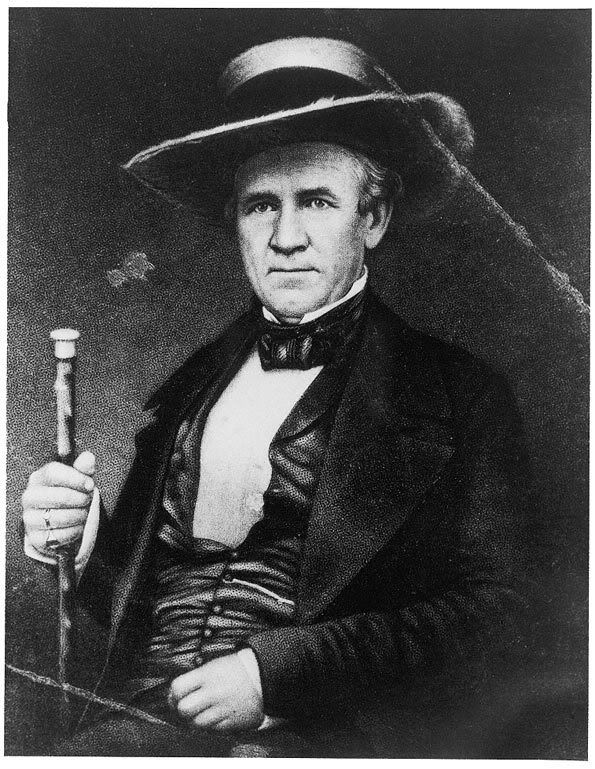 It never fails that I get people from Texas asking me where Houston (“HEW” ston) Street is. When I tell them that it is Houston (“HOW” ston) Street they often give me the look which says “Why is it pronounced Houston (“HOW” ston) if it says Houston (“HEW” ston). At first I thought that it was named after Texas native Sam Houston. Then I thought that maybe it was New York City’s way of being different to change the pronunciation of the name. After getting tired of making excuses, I decided to find out why Houston Street pronounced the way it is. So here goes.
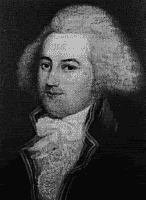 The street is not named after Sam Houston. It is named after William Houstoun (1755-1813), a native of Savannah Georgia. Who was William Houstoun you may ask, well here he is. William Houstoun was a lawyer from Georgia who was a member of the delegation from Georgia to both The Continental Congress from 1783 through 1786 and The Constitutional Convention in 1787. Pretty impressive but why is he linked with NYC.
Houstoun married into the Bayard family by wedding Mary Bayard on June 10, 1786. They were married until her death on August 7, 1806. The Bayard family lands laid within the areas of today’s West and East Villages and Houstoun Street cut through the middle of the land. Now see how I spelled the street as Houstoun instead of Houston. In my research, the street was correctly spelled as Houstoun Street up to the early 1800’s. When the spelling was changed to Houston Street is not known but if I find it out I will update the post.
Upon his death in on March 17, 1813, his body was brought to NYC from Savannah and interred at St. Paul’s Chapel.
So there is the actual origin behind Houston Street, NYC.
It never fails that I get people from Texas asking me where Houston (“HEW” ston) Street is. When I tell them that it is Houston (“HOW” ston) Street they often give me the look which says “Why is it pronounced Houston (“HOW” ston) if it says Houston (“HEW” ston). At first I thought that it was named after Texas native Sam Houston. Then I thought that maybe it was New York City’s way of being different to change the pronunciation of the name. After getting tired of making excuses, I decided to find out why Houston Street pronounced the way it is. So here goes. The street is not named after Sam Houston. It is named after William Houstoun (1755-1813), a native of Savannah Georgia. Who was William Houstoun you may ask, well here he is. William Houstoun was a lawyer from Georgia who was a member of the delegation from Georgia to both The Continental Congress from 1783 through 1786 and The Constitutional Convention in 1787. Pretty impressive but why is he linked with NYC. Houstoun married into the Bayard family by wedding Mary Bayard on June 10, 1786. They were married until her death on August 7, 1806. The Bayard family lands laid within the areas of today’s West and East Villages and Houstoun Street cut through the middle of the land. Now see how I spelled the street as Houstoun instead of Houston. In my research, the street was correctly spelled as Houstoun Street up to the early 1800’s. When the spelling was changed to Houston Street is not known but if I find it out I will update the post.
Upon his death in on March 17, 1813, his body was brought to NYC from Savannah and interred at St. Paul’s Chapel.
So there is the actual origin behind Houston Street, NYC.
Thursday, July 5, 2007
Lou Gehrig July 4, 1939
When you think about July 4th, images that come to mind are barbecues, picnic, beach gatherings and baseball. It is within this last image that I present today’s blog. Baseball and the 4th of July (In my humble opinion) go hand in hand. In terms of the Yankees, many historical moments have occurred on July 4th. From Phil Neikro’s 3,000 strikeout (1984), to Dave Righetti’s no hitter against the Red Sox (1983), the fabled 15 inning, 1-0 pitching duel between the Yanks’ Herb Pennock and Philadelphia’s Lefty Grove (1925) many a memorable moment has occurred on the legendary field at Yankee Stadium. But one event that stands alone apart from the events, I’ve previously mentioned is one that did not involve a play on the field. On July 4th, 1939, a legendary player said goodbye to both his teammates and the faithful in the stands. Lou Gehrig (1903-1941) bade farewell, falling to the disease that would bear his name.
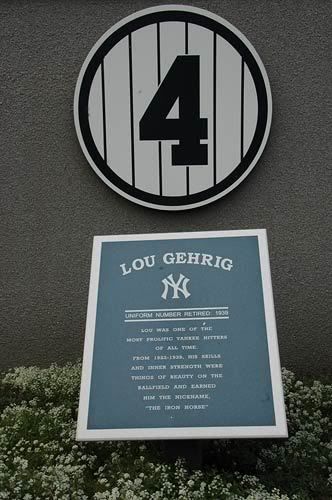 Lou Gehrig, a native of New York City played 1st base for the fabled New York Yankees. His storied career spanned 17 years, from 1923 to 1939 cementing himself as a true legend of the game. Playing along side fellow Hall of Famer Babe Ruth, the formidable duo wreaked havoc among opposing pitching. Not only was Gehrig known for his offensive prowess, he was also the model of consistency in the field playing for a total of 2,130 consecutive games until he was felled by a fatal disease.
Amyotrophic lateral sclerosis (commonly known ALS) often referred to as "Lou Gehrig's disease" is a progressive neurodegenerative disease that affects nerve cells in the brain and the spinal cord. Motor neurons reach from the brain to the spinal cord and from the spinal cord to the muscles throughout the body. The progressive degeneration of the motor neurons in ALS eventually leads to their death. When the motor neurons die the ability of the brain to initiate and control muscle movement is lost. With voluntary muscle action progressively affected, patients in the later stages of the disease may become totally paralyzed.
At first, Gehrig skills slowly degenerated. Plays that Gehrig made with ease seemed to take more effort to make. Balls that Gehrig easily sent into the stands were now easy pop-outs. Even normal activities such as walking short distances were a chore for Gehrig. It was within this scenario, that on May 2, 1939, that as Yankee captain Lou Gehrig played his final game for the Yankees.
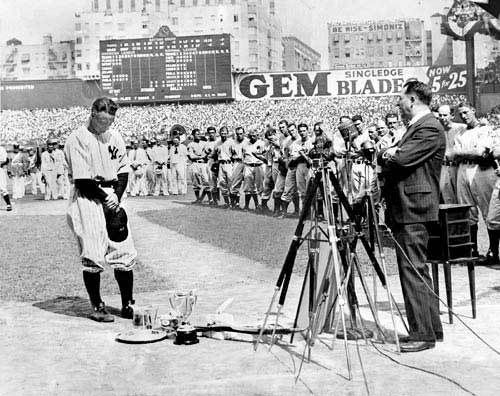
It was at the suggestion of New York sportswriter Paul Gallico for a day of recognition for Gehrig, that July 4th, 1939 will be forever linked to Yankee history. In front of over 62,000 fans and many teammates (including Babe Ruth), Lou Gehrig gave his famous and emotional farewell speech. Fighting back tears, Gehrig uttered the following words:
"Fans, for the past two weeks you have been reading about the bad break I got. Yet today I consider myself the luckiest man on the face of this earth. I have been in ballparks for seventeen years and have never received anything but kindness and encouragement from you fans.
"Look at these grand men. Which of you wouldn't consider it the highlight of his career just to associate with them for even one day? Sure, I'm lucky. Who wouldn't consider it an honor to have known Jacob Ruppert? Also, the builder of baseball's greatest empire, Ed Barrow? To have spent six years with that wonderful little fellow, Miller Huggins? Then to have spent the next nine years with that outstanding leader, that smart student of psychology, the best manager in baseball today, Joe McCarthy? Sure, I'm lucky.
"When the New York Giants, a team you would give your right arm to beat, and vice versa, sends you a gift - that's something. When everybody down to the groundskeepers and those boys in white coats remember you with trophies - that's something. When you have a wonderful mother-in-law who takes sides with you in squabbles with her own daughter - that's something. When you have a father and a mother who work all their lives so you can have an education and build your body - it's a blessing. When you have a wife who has been a tower of strength and shown more courage than you dreamed existed - that's the finest I know.
"So I close in saying that I may have had a tough break, but I have an awful lot to live for. Thank you."

For the audio version of the speech, click on any of the following links:
Lou Gehrig passed on almost two years later. On June 2, 1941, Lou succumbed to the disease that would bear his name. His ashes are buried at Kensico Cemetary in Valhalla New York.
Lou Gehrig, a native of New York City played 1st base for the fabled New York Yankees. His storied career spanned 17 years, from 1923 to 1939 cementing himself as a true legend of the game. Playing along side fellow Hall of Famer Babe Ruth, the formidable duo wreaked havoc among opposing pitching. Not only was Gehrig known for his offensive prowess, he was also the model of consistency in the field playing for a total of 2,130 consecutive games until he was felled by a fatal disease.Amyotrophic lateral sclerosis (commonly known ALS) often referred to as "Lou Gehrig's disease" is a progressive neurodegenerative disease that affects nerve cells in the brain and the spinal cord. Motor neurons reach from the brain to the spinal cord and from the spinal cord to the muscles throughout the body. The progressive degeneration of the motor neurons in ALS eventually leads to their death. When the motor neurons die the ability of the brain to initiate and control muscle movement is lost. With voluntary muscle action progressively affected, patients in the later stages of the disease may become totally paralyzed.
At first, Gehrig skills slowly degenerated. Plays that Gehrig made with ease seemed to take more effort to make. Balls that Gehrig easily sent into the stands were now easy pop-outs. Even normal activities such as walking short distances were a chore for Gehrig. It was within this scenario, that on May 2, 1939, that as Yankee captain Lou Gehrig played his final game for the Yankees.
It was at the suggestion of New York sportswriter Paul Gallico for a day of recognition for Gehrig, that July 4th, 1939 will be forever linked to Yankee history. In front of over 62,000 fans and many teammates (including Babe Ruth), Lou Gehrig gave his famous and emotional farewell speech. Fighting back tears, Gehrig uttered the following words:
"Fans, for the past two weeks you have been reading about the bad break I got. Yet today I consider myself the luckiest man on the face of this earth. I have been in ballparks for seventeen years and have never received anything but kindness and encouragement from you fans.
"Look at these grand men. Which of you wouldn't consider it the highlight of his career just to associate with them for even one day? Sure, I'm lucky. Who wouldn't consider it an honor to have known Jacob Ruppert? Also, the builder of baseball's greatest empire, Ed Barrow? To have spent six years with that wonderful little fellow, Miller Huggins? Then to have spent the next nine years with that outstanding leader, that smart student of psychology, the best manager in baseball today, Joe McCarthy? Sure, I'm lucky.
"When the New York Giants, a team you would give your right arm to beat, and vice versa, sends you a gift - that's something. When everybody down to the groundskeepers and those boys in white coats remember you with trophies - that's something. When you have a wonderful mother-in-law who takes sides with you in squabbles with her own daughter - that's something. When you have a father and a mother who work all their lives so you can have an education and build your body - it's a blessing. When you have a wife who has been a tower of strength and shown more courage than you dreamed existed - that's the finest I know.
"So I close in saying that I may have had a tough break, but I have an awful lot to live for. Thank you."
For the audio version of the speech, click on any of the following links:
| File type | File size | Free Player |
| Wav | 156 kb |  |
| MP3 | 220 kb | |
| Ram | 253 kb |  |
Lou Gehrig passed on almost two years later. On June 2, 1941, Lou succumbed to the disease that would bear his name. His ashes are buried at Kensico Cemetary in Valhalla New York.
Thursday, March 15, 2007
1960 Plane Crash in Brooklyn
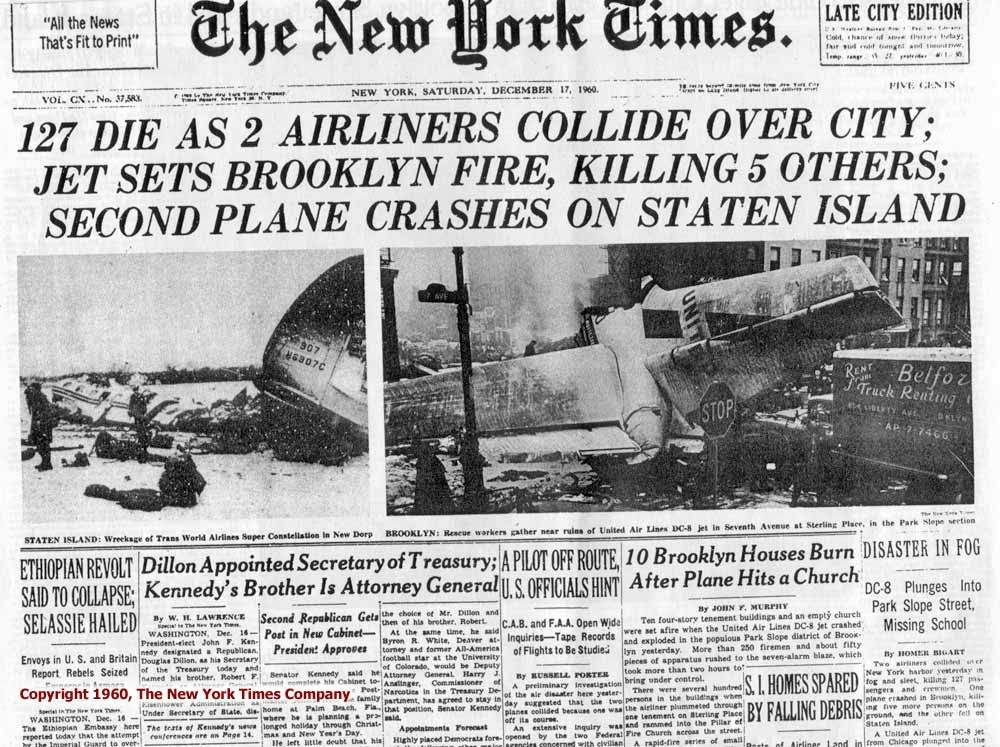
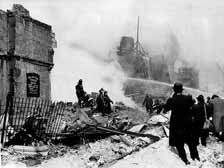 Imagine this scene. It’s an early morning, 9 days before Christmas. The snow that had fallen a day or so ago was now turning into slush under the constant footfalls of people taking care of the daily business. The sky above was grey with dark clouds, which were letting down a wet snow on the streets. Suddenly, falling from the sky, a commercial aircraft is descending upon the city streets and crashes down, engulfing the area with flames. Sounds like something out of a disaster movie doesn’t it? Well, it really happened, and it happened in the Park Slope section of Brooklyn on December 16, 1960.
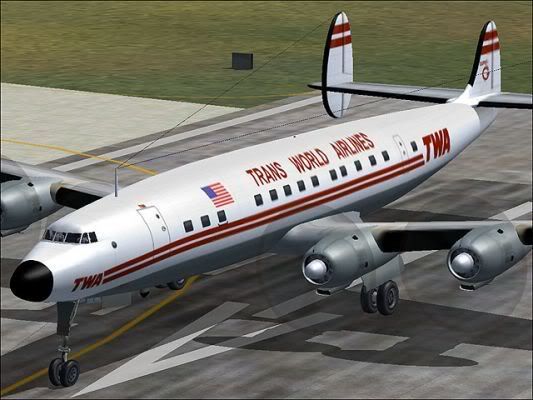 The sound of the was described by a witness to have sounded like ‘a thousand dishes crashing from the sky’ was in actuality a United Airlines DC-8 carrying 84 passengers. The plane was a victim of a mid air collision due to lack of visibility due to inclement weather with a smaller TWA Connie aircraft. The TWA Connie (aka the Lockheed Super Constellation) was a small plane that was powered by four propeller engines and had a cruising speed of 325 mph and could carry up to 64 passengers. The DC-8 (aka the Douglas DC-8 Jet) was the largest commercial plane at the time and was powered by four turbojet engines and had a cruising speed of 579 mph and could carry up to 189 passengers.
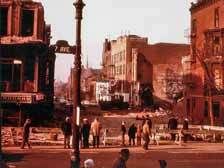
 The smaller plane crash-landed on Staten Island’s Miller Field killing all 44 passengers/crew members. Amazingly, the larger plane was able to stay airborne for another 8 and a half miles before finally succumbing to the damage that was inflicted to it and crash-landed on the streets of residential Park Slope Brooklyn, near the intersection of 7th Avenue and Sterling Street. The crushed body of the plane left a trail of burning cars, bodies and buildings, including the ironically named Pillar of Fire Evangelical church.Miraculously, one young man of 11 years of age, Stephen Baltz of Wilmette, Illinois was tossed from the plane and landed in a small snow bank. Though he was rescued by police and taken to Methodist hospital, he did not survive his injuries. In addition to all of the passengers of the plane, a number of civilians also perished. In total, 135 people were killed.
Here are some links for more information on this plane crash:
The actual article from Time Magazine December 26, 1960
The Report Issued by the DOT in PDF format
An informative article from The Park Slope Reader
Subscribe to:
Posts (Atom)