Thursday, July 5, 2007

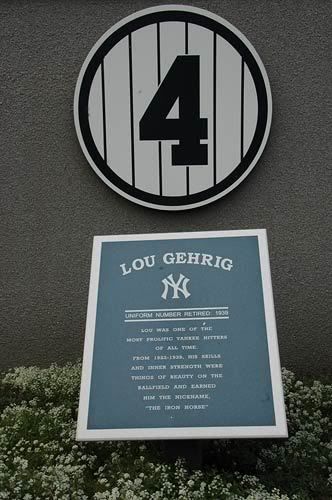
Lou Gehrig July 4, 1939

When you think about July 4th, images that come to mind are barbecues, picnic, beach gatherings and baseball. It is within this last image that I present today’s blog. Baseball and the 4th of July (In my humble opinion) go hand in hand. In terms of the Yankees, many historical moments have occurred on July 4th. From Phil Neikro’s 3,000 strikeout (1984), to Dave Righetti’s no hitter against the Red Sox (1983), the fabled 15 inning, 1-0 pitching duel between the Yanks’ Herb Pennock and Philadelphia’s Lefty Grove (1925) many a memorable moment has occurred on the legendary field at Yankee Stadium. But one event that stands alone apart from the events, I’ve previously mentioned is one that did not involve a play on the field. On July 4th, 1939, a legendary player said goodbye to both his teammates and the faithful in the stands. Lou Gehrig (1903-1941) bade farewell, falling to the disease that would bear his name.

Lou Gehrig, a native of New York City played 1st base for the fabled New York Yankees. His storied career spanned 17 years, from 1923 to 1939 cementing himself as a true legend of the game. Playing along side fellow Hall of Famer Babe Ruth, the formidable duo wreaked havoc among opposing pitching. Not only was Gehrig known for his offensive prowess, he was also the model of consistency in the field playing for a total of 2,130 consecutive games until he was felled by a fatal disease.

Amyotrophic lateral sclerosis (commonly known ALS) often referred to as "Lou Gehrig's disease" is a progressive neurodegenerative disease that affects nerve cells in the brain and the spinal cord. Motor neurons reach from the brain to the spinal cord and from the spinal cord to the muscles throughout the body. The progressive degeneration of the motor neurons in ALS eventually leads to their death. When the motor neurons die the ability of the brain to initiate and control muscle movement is lost. With voluntary muscle action progressively affected, patients in the later stages of the disease may become totally paralyzed.

At first, Gehrig skills slowly degenerated. Plays that Gehrig made with ease seemed to take more effort to make. Balls that Gehrig easily sent into the stands were now easy pop-outs. Even normal activities such as walking short distances were a chore for Gehrig. It was within this scenario, that on May 2, 1939, that as Yankee captain Lou Gehrig played his final game for the Yankees.
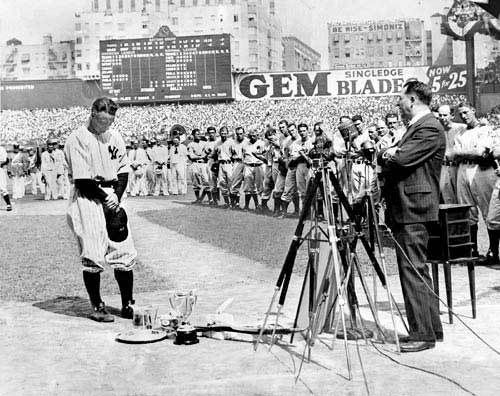

It was at the suggestion of New York sportswriter Paul Gallico for a day of recognition for Gehrig, that July 4th, 1939 will be forever linked to Yankee history. In front of over 62,000 fans and many teammates (including Babe Ruth), Lou Gehrig gave his famous and emotional farewell speech. Fighting back tears, Gehrig uttered the following words:

"Fans, for the past two weeks you have been reading about the bad break I got. Yet today I consider myself the luckiest man on the face of this earth. I have been in ballparks for seventeen years and have never received anything but kindness and encouragement from you fans.

"Look at these grand men. Which of you wouldn't consider it the highlight of his career just to associate with them for even one day? Sure, I'm lucky. Who wouldn't consider it an honor to have known Jacob Ruppert? Also, the builder of baseball's greatest empire, Ed Barrow? To have spent six years with that wonderful little fellow, Miller Huggins? Then to have spent the next nine years with that outstanding leader, that smart student of psychology, the best manager in baseball today, Joe McCarthy? Sure, I'm lucky.

"When the New York Giants, a team you would give your right arm to beat, and vice versa, sends you a gift - that's something. When everybody down to the groundskeepers and those boys in white coats remember you with trophies - that's something. When you have a wonderful mother-in-law who takes sides with you in squabbles with her own daughter - that's something. When you have a father and a mother who work all their lives so you can have an education and build your body - it's a blessing. When you have a wife who has been a tower of strength and shown more courage than you dreamed existed - that's the finest I know.

"So I close in saying that I may have had a tough break, but I have an awful lot to live for. Thank you."


For the audio version of the speech, click on any of the following links:

File typeFile size Free Player
Wav156 kb
Free Windows Media Player
MP3220 kb
Free Windows Media Player
Ram253 kb
Free RealOne Player


Lou Gehrig passed on almost two years later. On June 2, 1941, Lou succumbed to the disease that would bear his name. His ashes are buried at Kensico Cemetary in Valhalla New York.

Thursday, March 15, 2007

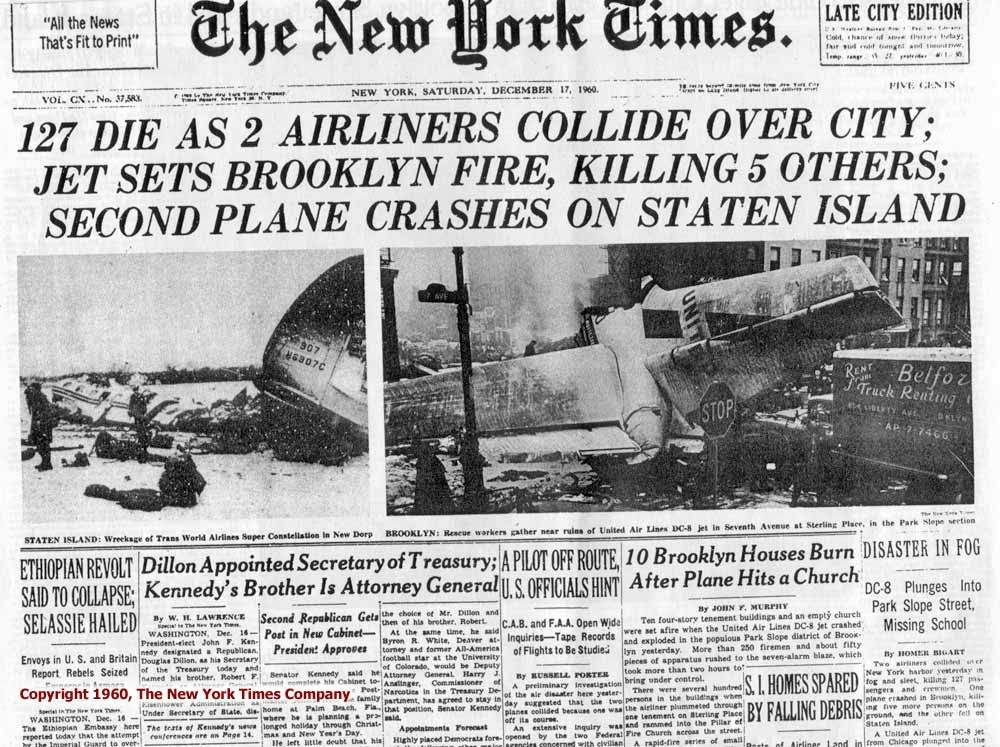
1960 Plane Crash in Brooklyn


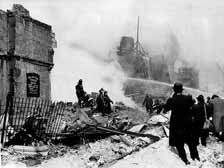
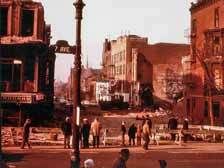
Imagine this scene. It’s an early morning, 9 days before Christmas. The snow that had fallen a day or so ago was now turning into slush under the constant footfalls of people taking care of the daily business. The sky above was grey with dark clouds, which were letting down a wet snow on the streets. Suddenly, falling from the sky, a commercial aircraft is descending upon the city streets and crashes down, engulfing the area with flames. Sounds like something out of a disaster movie doesn’t it? Well, it really happened, and it happened in the Park Slope section of Brooklyn on December 16, 1960.

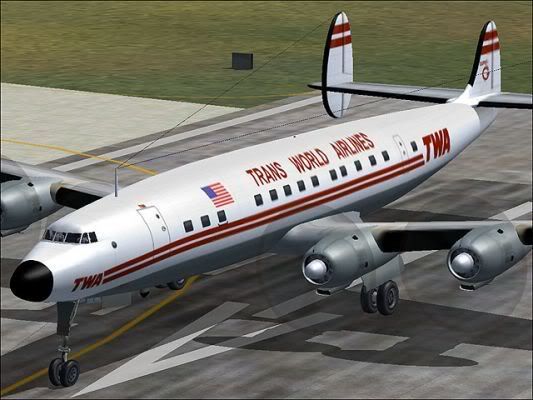
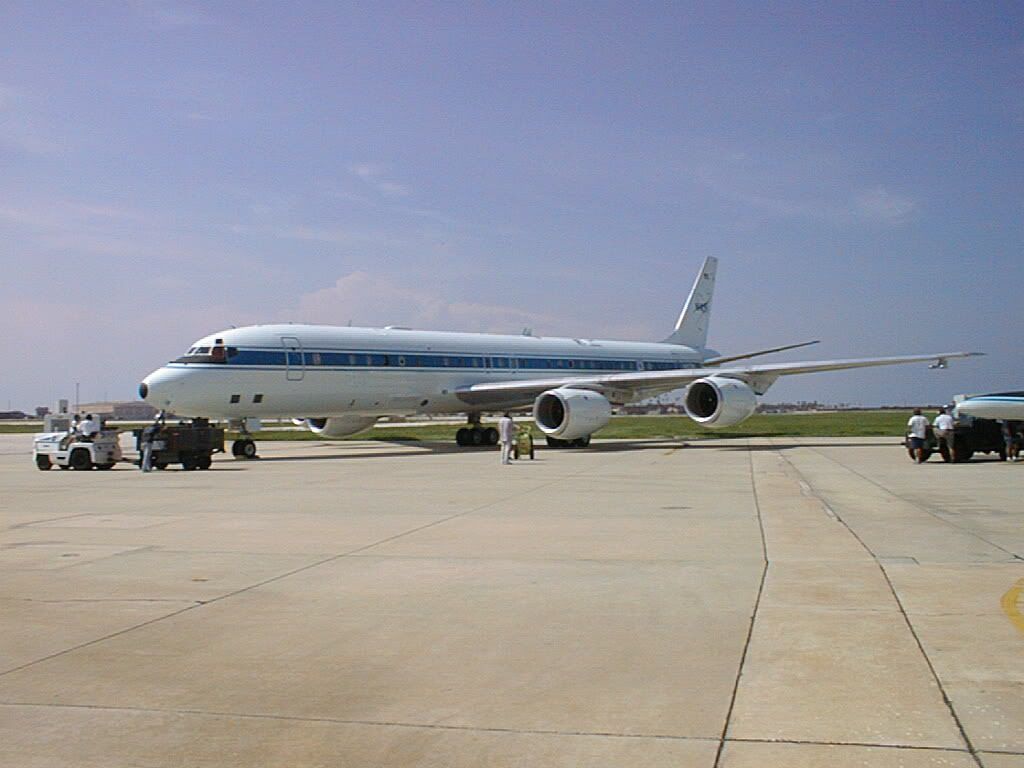
The sound of the was described by a witness to have sounded like ‘a thousand dishes crashing from the sky’ was in actuality a United Airlines DC-8 carrying 84 passengers. The plane was a victim of a mid air collision due to lack of visibility due to inclement weather with a smaller TWA Connie aircraft. The TWA Connie (aka the Lockheed Super Constellation) was a small plane that was powered by four propeller engines and had a cruising speed of 325 mph and could carry up to 64 passengers. The DC-8 (aka the Douglas DC-8 Jet) was the largest commercial plane at the time and was powered by four turbojet engines and had a cruising speed of 579 mph and could carry up to 189 passengers.

The smaller plane crash-landed on Staten Island’s Miller Field killing all 44 passengers/crew members. Amazingly, the larger plane was able to stay airborne for another 8 and a half miles before finally succumbing to the damage that was inflicted to it and crash-landed on the streets of residential Park Slope Brooklyn, near the intersection of 7th Avenue and Sterling Street. The crushed body of the plane left a trail of burning cars, bodies and buildings, including the ironically named Pillar of Fire Evangelical church.

Miraculously, one young man of 11 years of age, Stephen Baltz of Wilmette, Illinois was tossed from the plane and landed in a small snow bank. Though he was rescued by police and taken to Methodist hospital, he did not survive his injuries. In addition to all of the passengers of the plane, a number of civilians also perished. In total, 135 people were killed.


Here are some links for more information on this plane crash:
The actual article from Time Magazine December 26, 1960
The Report Issued by the DOT in PDF format
An informative article from The Park Slope Reader

Sunday, February 18, 2007

George Washington and NYC Part I

George Washington: The Revolutionary War Years

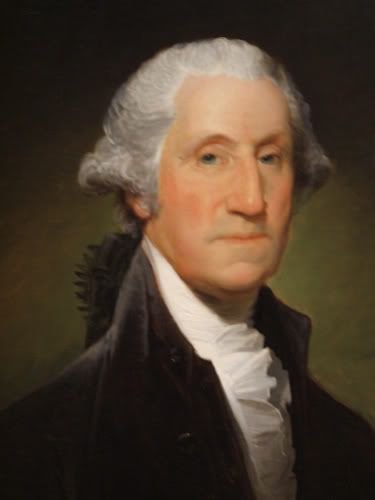
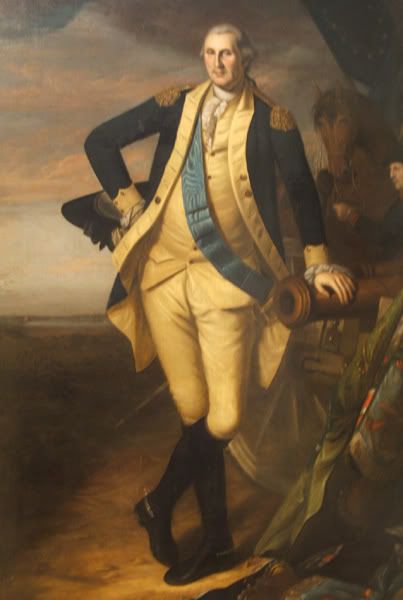
George Washington and the City of New York will forever be historically linked. From the Revolutionary War to Washington’s Presidency, the evolution of George Washington and NYC went hand in hand. Dating as early as March of 1776, George Washington led his army towards New York City. Setting up fortifications on Long Island (Within the borough of Brooklyn) and New York City, Washington awaited the expected British attack. By the time of July 1776, The British had set up their camp on Staten Island and by late August commenced their attack led by overall commander Lieutenant General Sir William Howe.

With half of his army (at the current location of Flatbush) led by Major General Israel Putnam on Long Island, they locked in battle with the British troops. Led by both Admiral Richard Howe and Major General Sir Henry Clinton, the British troops were able to cause the American troops to withdrawal and retreat to Brooklyn Heights. It was at this location that the American troops were able to retreat on barges over the East River. Due to a lucky stroke of nature, a thick fog bank rolled in and aided to conceal the escape of the American troops from the British. By mid September 1776, New York City was in the hands of the British and the American troops were still in retreat up the island.

It was during what was known as The Battle of Harlem Heights (Current neighborhoods of Morningside Heights and West Harlem) that the American troops scored some minor victories against the advancing British troops. Though the British troops were slowed, their advance was not halted and the American troops continued their northern retreat. There were continual skirmishes between the troops at Pell’s Point (Pelham Bay Park, Bronx) and White Plains. The ultimate showdown on New York City soil took place at Fort Washington.

Located on the highest natural point of Manhattan, Fort Washington was built to provide defense of the Manhattan Island side of the Hudson River in conjunction with Fort Lee on the opposite side of the Hudson (New Jersey side). Under heavy bombardment by both British and Hessian cannons, Fort Washington fell leaving Fort Lee defenseless. Grudgingly, George Washington and his troops retreated from Fort Lee leaving the British to hold New York City for a period of 8 years. With the fall of the British and their eventual evacuation from New York City on November 25, 1783, General Washington led his troops from the North retaking his namesake fort.

George Washington and NYC Part II

George Washington: Fraunces Tavern, St Paul’s Chapel and Federal Hall


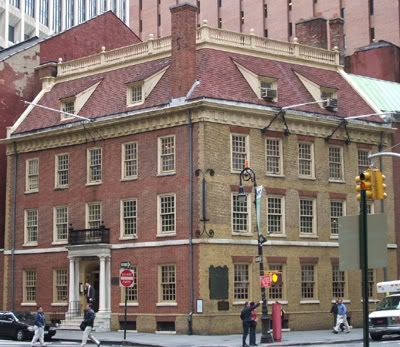
Though General Washington spent many a night at Samuel Fraunces’ Tavern, the night that is most widely known is December 4, 1783. It was within the “Long Room” of Fraunces Tavern that General Washington gave notice of his retirement to his closest Generals. With a fond and emotional farewell, General Washington commenced his journey to his plantation at Mount Vernon.

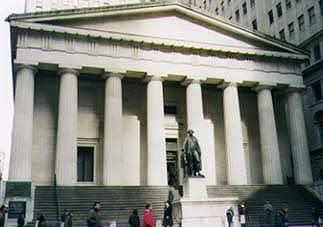
With General Washington’s election to the Presidency of the Newly Formed United States in 1789, his inauguration would be held at Federal Hall (located at the intersection of Wall and Broad Streets). It was at St. Paul’s Chapel (located at Church Street between Fulton and Vesey Streets) that the inauguration mass was held on August 30, 1789 and the eventual inauguration ceremony was held on the balcony of Federal Hall. New York City remained the interim capital until 1790.

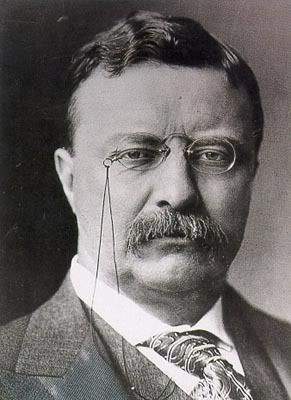
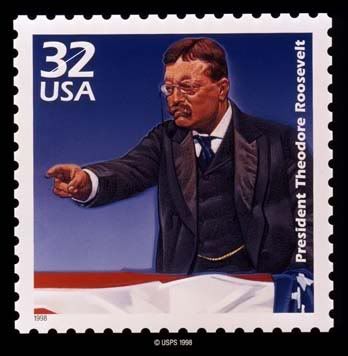
Theodore Roosevelt and NYC

In Honor of Presidents Day, I'm going to be covering two Presidents who have been influential in NYC History. I'm going to be covering it in a three part post. Please feel free to add to the discussion.

Though there have been a number Presidents born in New York State (Van Buren, Fillmore, Franklin D. Roosevelt) only one President has the distinction of being born in New York City. Theodore Roosevelt was born in New York City on October 27, 1858 and lived at The Roosevelt House located at 28 East 20th Street for a period of 13 years. With his graduation from Harvard University in 1880 Teddy Roosevelt decided to enter the realm of politics. As a member of the Republican Party, he was elected to The New York State Assembly serving three consecutive one-year terms (One of them as Minority Leader).

Though he lost the New York City mayoral election of 1886 (At the tender age of 28) he gradually became involved in national politics. Having served as The Commissioner of the U.S. Civil Service, Teddy returned to the City of his birth. On May 6, 1895, New York City Mayor William Strong appointed Teddy Roosevelt as the President of New York City’s 4 man Board of Police Commissioners.

Many of his goals as the President of the Board included:

- The Elimination of Bribery for Promotion
- The Enforcement of all laws by Policemen
- The Enforcement of the “Blue Laws” Prohibiting Sunday Drinking

Through his policies (Especially the Blue Laws) turned the once popular Teddy Roosevelt into a reviled figure almost overnight. Through the scheming of the power holding Tammany Hall and other political figures, Teddy Roosevelt looked for an escape. He would eventually find his escape in the form of an appointment to the position of Assistant Secretary of the Navy by President William McKinley in 1897.

Though he never succeeded in completing all of his goals, he was able to introduce to the police force the bicycle force and mandatory pistol shooting practice. Though he lost his fight against the vices of New York City, his greatest success may have been his introduction to the plight of the poor segments of society that helped to shape many of his Progressive views and later policies.

Teddy Roosevelt would eventually resign his post as The Assistant Secretary of the Navy to lead the Rough-Riders in the newly declared war on Spain. Upon his return to New York City after the war, he was asked to run for Governor of New York, which he narrowly won. Though his time in office was brief, he alienated most of his party mate within the Republican Party. With his nomination to the ticket of the Vice Presidency with William McKinley, it was deemed by his state’s party machine that he would no longer be a problem of theirs. Though it seemed like the best thing at the time, Teddy Roosevelt would eventually ascend to the highest political office of all with the assassination of President William McKinley in 1901.