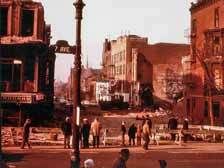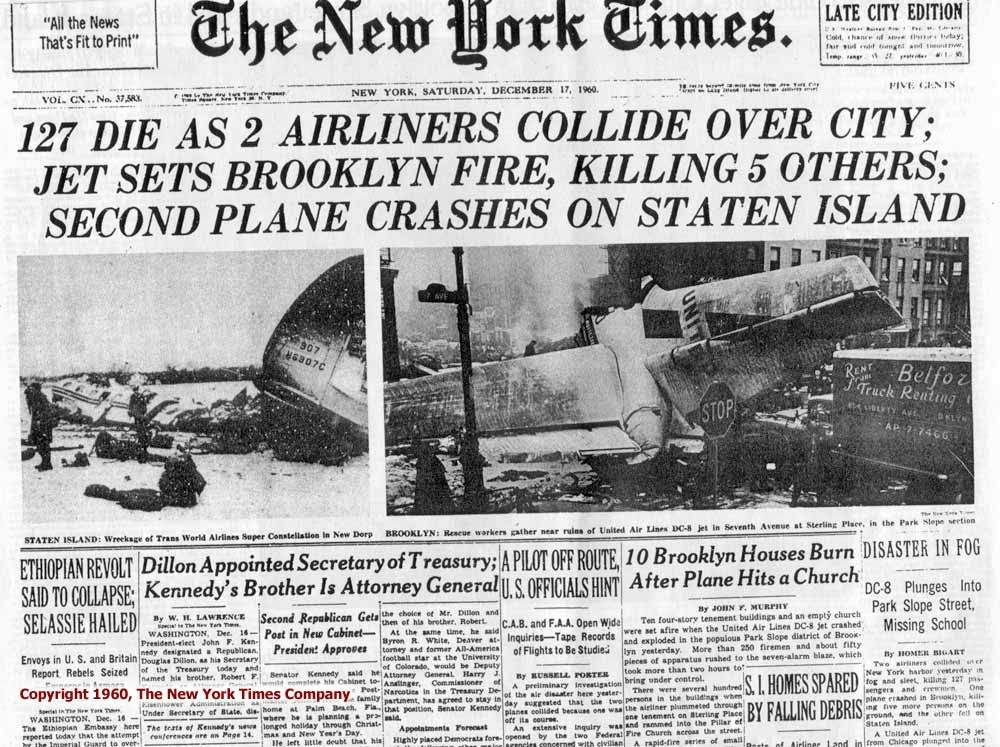
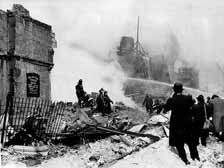
 Imagine this scene. It’s an early morning, 9 days before Christmas. The snow that had fallen a day or so ago was now turning into slush under the constant footfalls of people taking care of the daily business. The sky above was grey with dark clouds, which were letting down a wet snow on the streets. Suddenly, falling from the sky, a commercial aircraft is descending upon the city streets and crashes down, engulfing the area with flames. Sounds like something out of a disaster movie doesn’t it? Well, it really happened, and it happened in the Park Slope section of Brooklyn on December 16, 1960.
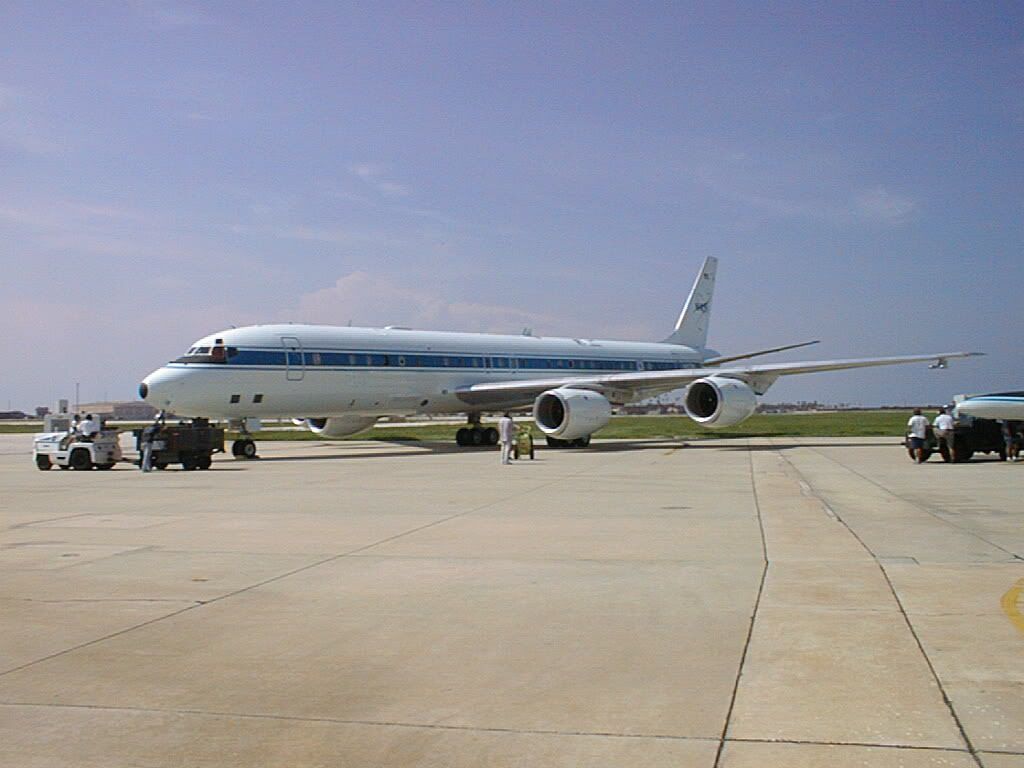
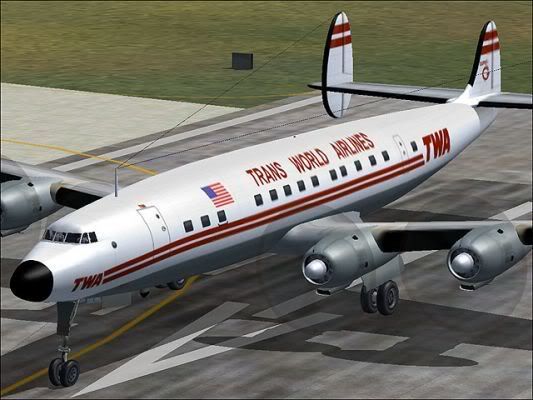 The sound of the was described by a witness to have sounded like ‘a thousand dishes crashing from the sky’ was in actuality a United Airlines DC-8 carrying 84 passengers. The plane was a victim of a mid air collision due to lack of visibility due to inclement weather with a smaller TWA Connie aircraft. The TWA Connie (aka the Lockheed Super Constellation) was a small plane that was powered by four propeller engines and had a cruising speed of 325 mph and could carry up to 64 passengers. The DC-8 (aka the Douglas DC-8 Jet) was the largest commercial plane at the time and was powered by four turbojet engines and had a cruising speed of 579 mph and could carry up to 189 passengers.
 The smaller plane crash-landed on Staten Island’s Miller Field killing all 44 passengers/crew members. Amazingly, the larger plane was able to stay airborne for another 8 and a half miles before finally succumbing to the damage that was inflicted to it and crash-landed on the streets of residential Park Slope Brooklyn, near the intersection of 7th Avenue and Sterling Street. The crushed body of the plane left a trail of burning cars, bodies and buildings, including the ironically named Pillar of Fire Evangelical church.Miraculously, one young man of 11 years of age, Stephen Baltz of Wilmette, Illinois was tossed from the plane and landed in a small snow bank. Though he was rescued by police and taken to Methodist hospital, he did not survive his injuries. In addition to all of the passengers of the plane, a number of civilians also perished. In total, 135 people were killed.
Here are some links for more information on this plane crash:
The actual article from Time Magazine December 26, 1960
The Report Issued by the DOT in PDF format
An informative article from The Park Slope Reader